
 A few months ago I met your son. He said he would be waiting for us in the Berkeley park near where he sleeps outside at night, but at the last minute he called and was in San Francisco. He said he was at “the Mrs. Doubtfire house” with a photograph of his best friend, and that the photo showed numbers and codes predicting Robin Williams’ suicide. He found the house where Williams made one of his films, and was trying to talk to the owner. It was all part of a complex plan, marked mathematically in signs and omens he was collecting.
Author Archives: Will Hall
Thai Translation of Coming Off Meds Guide!

A translator from Thailand volunteered many hours of work to translate the Harm Reduction Guide to Coming Off Psychiatric Drugs into Thai! I am deeply appreciative…
You can download the file, and other translations of the Guide, at www.willhall.net/files/comingoffmeds
and at www.theicarusproject.net/comingoffmeds.
This is an extraordinary service to Thailand and to Thai speakers around the world. The translator is remaining anonymous due to the extreme psychiatric violence that is routine in Thailand, but sent this statement:
The Thai translation of the guide was inspired by a Thai person who went through forced treatment of the mainstream psychiatry and was traumatized because no one listened to her real cause that lay in her mind, but instead people around her judged her superficially and wanted a quick fix. She has learned about the alternative psychiatry and was deeply afraid of the ignorant medical practice and drug use. She deeply wants the mainstream psychiatry to be transformed into compassionate non-judgemental listening and holistic treatment.

Is it Depression? Or Melancholy? Or…
” Depressed. ”
It’s a word I put in quotes because, like so many words we use to describe our mental health experiences, it has as much power to confuse as it does to clarify. We live in a culture bombarded by media and sped up by rapid-fire social interactions. It’s definitely useful to grab hold of a simple, short, sound-bite term, to quickly describe what we are feeling or suffering. “Depression” is such a word – it evokes and encapsulates, conjures the images of that ugly pit of despair that can drive so many to madness and suicide. Yet at the same time the words we use, strangely, become like those pens deposited in medical offices and waiting rooms around the world: ready at hand, easily found, familiar — and tied to associations, marketing and meanings we were only dimly aware were shaping how we think.
Lincoln’s Depression | Joshua Wolf Shenk | Madness Radio
Celebrated US President Abraham Lincoln also suffered from life-threatening depression. Did he view his “melancholy” as a treatable illness, as a punishment from God — or as a source of his gifts? How did Lincoln’s extraordinary leadership abilities arise from his struggle with extreme pain?
Joshua Wolf Shenk, author of Lincoln’s Melancholy: How Depression Challenged a President and Fueled His Greatness, explores the famous President’s battle with despair, suicide, and intense sorrow, and discusses what people with depression – and the medical establishment empowered to treat them – can learn from Lincoln’s suffering. www.shenk.net www.theatlantic.com/magazine/archive/2005/10/lincolns-great-depression/304247/ www.theatlantic.com/magazine/archive/2009/06/what-makes-us-happy/307439/ www.shapell.org/manuscript.aspx?lincoln-mccullough-civil-war-condolence
The Substance of Substance Use: Talking About Marijuana, Alcohol, and Other Drugs
 When I was locked in a psychiatric hospital, I wasn’t able to have much of a conversation with my parents about what was going on. Phone calls were tense and filled with silence, and as I stood at the ward payphone I was so confused and frozen in fear that each call just confirmed to my parents how lost I was. Each day as a patient centered around the various prescriptions I was on, and, like so many people suffering in a psychosis, helping me became a wait to “find the right combination of medications.”
Do You Think It’s Real? Responding to Alternate Realities
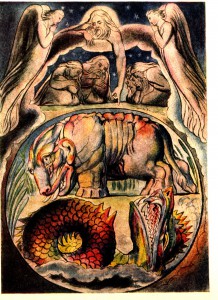 Some thoughts after interviewing Tim Dreby:
Everyone has beliefs that seem too bizarre, illogical, or fantastic to someone else to accept. Religious views, paranormal interpretations, political convictions, interpersonal conflicts — all can put us in a category where other people consider what we think to be incomprehensible. Just spend time with someone from a different culture than yours, and you are likely to encounter things that don’t make any sense to you at all, yet the other person is living with them as if they were true.
We’ve learned to co-exist with different beliefs as one of our most cherished values of tolerance in a multicultural society. That lesson can be key for encountering the different realities in situations where someone is being called psychotic, delusional, schizophrenic or mentally ill.
Special Messages | Tim Dreby | Madness Radio
What if you were the only one seeing coded messages, covert realities, and elaborate plots all around you? Does that make you out of touch with reality, “paranoid” and “psychotic?” Or is it real — but you are just so upset that everyone thinks the problem is you instead?
Tim Dreby, a psychotherapist and author in the San Francisco Bay Area, endured a life-threatening — and real — encounter with gangsters, police, and political conspiracy. He also survived a schizophrenia diagnosis, and today leads support groups for people facing overwhelming intuitions, coded messages, and conspiracies, helping them heal from trauma and regain control of their lives. fightingforfreedominamerica.
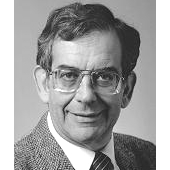
Psychotherapy for Schizophrenia | Bert Karon
In schizophrenia really an “incurable illness” — or a state of chronic terror? Are there ways for psychotherapy to reach people in different realities? And can talk therapy offer a humane and empowering approach?
Bert Karon, psychoanalyst since 1955, co-author of the classic textbook Psychotherapy of Schizophrenia, and Professor of Clinical Psychology at Michigan State University, outlines psychoanalysis and discusses how his talking cure helps people diagnosed psychotic and schizophrenic.
http://psychrights.org/Research/Digest/Effective/BKaronTragedyofnoPsychotherapy4Schizophrenia.pdf

Communicating With Psychosis | Dina Tyler
Are there ways to reach people in states of madness? How do talking with ghosts, hearing voices, and seeing visions — as well as enduring family turmoil — relate to psychotic crisis?
When Dina Tyler discovered the meaning of life in an altered state, the treatment she received only inflicted further trauma. Dina instead embraced her madness as a guiding force for recovery, and found a way to leave labels and medications behind. Today she works as a counselor to youth experiencing psychosis, communicating across different realities with people driven away from traditional care.
Dina is the co-director of the Bay Area Mandala Project, co-founder of Bay Area Hearing Voices, and works with an early psychosis intervention program in Alameda County, California. She was awarded Peer Specialist of the Year by the National Council for Behavioral Health in 2015!
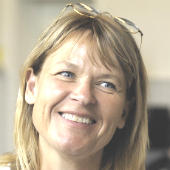
Family Homes | Carina Håkansson
What if ordinary families could provide care for people psychiatry has given up on? Is there a way out for people stuck long-term as mental patients? Can human relationships and living together be more effective than medications, diagnosis, and hospitals?
Carina Håkansson’s values wouldn’t allow her to work in the traditional psychiatric system in Sweden. She left to create the Family Care Foundation, providing foster homes, therapy, and supervision for people with psychosis and extreme emotional distress. What can we all learn from this visionary — and simple — solution?
http://www.familjevardsstiftelsen.se
http://bit.ly/1l8KYQz
http://www.madinamerica.com/2013/04/carina-hakansson-family-care-foundation/

Healing Connection | Lauren Spiro
How do we recover from childhood violence? When Lauren Spiro was 14, her father was murdered. Eighteen months later, she began to have unusual spiritual experiences and was diagnosed with schizophrenia. Today she works to promote peace and healing in communities, fulfilling the vision she had in her extreme state.
Lauren is co-director of Emotional CPR, associate director of the National Coalition for Mental Health Recovery, and her new memoir is Living For Two: A Daughter’s Journey from Grief and Madness to Forgiveness and Peace.
http://laurenspiro.wordpress.com
www.ncmhr.org
www.emotional-cpr.org

Redefining Research: Nev Jones
What if researchers collaborated with patients rather than treating them as “informants” and objects of study? Nev Jones survived her mother’s frightening extreme states — and then her own mind unravelled into different realities. She was herself diagnosed with schizophrenia, and began a lifelong exploration of the uniqueness of madness.
Today Nev is a post-doctorate fellow at Stanford University, founder of Chicago Hearing Voices and the Lived Experience Research Network, and part of the the movement to create alternatives to professional control of research on psychosis.
http://depaul.academia.edu/NevJones
http://www.chicagohearingvoices.org
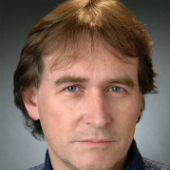
Risky Pills: David Healy
Adverse effects from prescription drugs are the 4th leading cause of death in America. How can we know if the pills we take are actually safe? What can we do if they aren’t?
Dr. David Healy, internationally renowned psychiatrist, whistleblower, and author of 20 books, discusses industry corruption of pharmaceutical regulation and proposes better ways to protect patients and prevent harm.
http://www.rxisk.com
http://www.davidhealy.org
http://1.usa.gov/LpbTvU
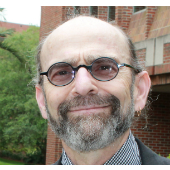
Medical Coercion: Tomi Gomory
If madness isn’t like other illnesses, what is it? Should psychiatry have the power of legal coercion? How can the legacy of Thomas Szasz inform new ways of helping people?
Tomi Gomory, associate professor of social work at Florida State University and co-author of Mad Science: Psychiatric Coercion, Diagnosis, and Drugs, explores thinking beyond the medical model of emotional distress.

Indian Country Psychology: David Walker
How is the legacy of colonialism impacting American Indian mental health today? Does the Indian Health Service meet the needs of the people on tribal land? Can Native peoples revitalize cultural traditions and reverse centuries of racism?
David Walker, mixed-heritage Cherokee, psychologist working at the Yakama Nation, and author of the award-winning novel Tessa’s Dance, discusses healing the deep wounds of intergenerational trauma in Indian Country.

















 Creative Commons 2.5 copyright
Recent Comments