
Social Justice & War
The End of the World | Will Hall | Madness Radio

What can R.D. Laing, madness, and Star Trek teach us about the end of the world – and saving it? Will Hall reads “Can Madness Save the World? Where R.D. Laing—and Star Trek—Meet,” published on Mad In America March 14, 2024. The essay draws on the original series Star Trek episode City on the Edge of Forever and on The Obvious, Laing’s speech at the 1967 Dialectics Of Liberation Congress. (Trust us, this all does makes sense!)
www.madinamerica.com/2024/03/can-madness-save-the-world-where-r-d-laing-and-star-trek-meet/
Oddball Magazine w/ Will Hall | Jason Wright | Madness Radio

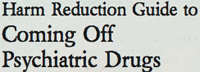
In this guest podcast, Jason Wright of Oddball Magazine sits down with Madness Radio host Will Hall, author of the Harm Reduction Guide to Coming Off Psychiatric Drugs, to discuss mental health abolition, harm reduction, democratic socialism, and more in a far ranging conversation. You may have noticed the world is falling apart, time to think big and outside! (And seriously consider vitamin D supplementation). Check out Jason’s work and the community at Oddball Magazine here:
https://oddballmagazine.com/
Decolonizing Early Psychosis | Rachel Jane Liebert | Madness Radio

Do early psychosis programs serve healing – or function as surveillance and control? Are treatments for paranoia actually themselves forms of paranoia, based on scientific racism and white supremacy? By defining and enforcing “normal” does psychiatry wage a war on the imagination?
Rachel Jane Liebert is a multi-media artist and Critical Psychology senior lecturer at the University of East London, using feminist research to decolonize modern psychiatry. Her new book Psycurity: Colonialism, Paranoia, and the War on Imagination brings her background as a Pakeha (white/settler) New Zealander to free madness from whiteness and express the imaginative potential of states labeled paranoia. 58 min version
https://bit.ly/2ohWcQI
https://racheljaneliebert.com/
https://uel.academia.edu/racheljaneliebert
Podcast: Play in new window | Download (0.2KB)
Subscribe: RSS
Dignity and Humiliation | Evelin Lindner | Madness Radio

What is at the root of world violence? How does psychiatry re-create dynamics of humiliation and shame that drive people crazy? Is there a just and equitable way out of the spirals of attack and counterattack tearing humanity apart? Evelin Lindner was nominated 3 times for the Nobel Peace Prize for her work internationally to overcome the roots of violence and war. Her Dignity and Humiliation Studies initiative is showing a new way to treat each other — from our most intimate relations to our international foreign policies — and also in our response to mental health crisis.
www.humiliationstudies.org/
https://en.wikipedia.org/wiki/Evelin_Lindner
https://www.youtube.com/watch?v=kQZMxS7UI_k
Legacy of R.D. Laing | Michael Guy Thompson | Madness Radio

Is psychosis a journey and a breakthrough to somewhere more authentic? Should unhappy people be made to adjust to a mad society? Scottish psychiatrist R.D. Laing was a fierce critic of the mental health system, and saw madness as a rational adaptation to irrational family and social constraints. Laing’s compelling prose, acute intellect, and spiritual insight made a huge cultural impact worldwide, shaping the psychiatric survivor movement and calling to overturn social conventions during the U.S. war in Vietnam and the revolutionary 1960s. How are Laing’s provocative insights about politics and culture still relevant today?
Michael Guy Thompson, a psychoanalyst and founder of the Gnosis Retreat Center, worked with R.D. Laing in London and has created hospital alternative sanctuaries for people struggling with experiences called psychosis. He directs the annual R.D. Laing in the 21st Century Symposium at Esalen Institute. www.gnosisretreatcenter.org www.michaelguythompson.com
www.rdlaingsymposium.com
Meditation and Liberation | Nirali Shah | Madness Radio

Is mindfulness meditation about calming the mind and accepting things as they are? Or is it a force for social change and challenging oppression? Can meditation help us become intimate with our wild, primal and untamed creative force? Nirali Shah, certified UCLA mindfulness facilitator and teacher at Spirit Rock, has spent thousands of hours meditating, as well as serving in one of the largest slum communities of Asia. She currently teaches with technology companies such as Google as well as academic institutions and non-profits, with a focus on re-wilding the self.
http://www.niralis.com http://bit.ly/2nW1krF
https://www.spiritrock.org/InstructorDetails?calendarinstructorid=177996
https://gtalks-gs.appspot.com/talk/meditation-for-re-wilding-the-self
Refugees and Trauma | Khatera Aslami-Tamplen | Madness Radio
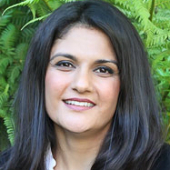
What is it like to flee a war-torn country as a child? What lasting psychological effects do refugees face? Can peer support and trauma informed care lead to lasting recovery? Khatera Aslami Tamplen, an Afghan-American and the Consumer Empowerment Manager for Alameda CountyBehavioral Health Services in California discusses war trauma, the activist struggle to end involuntary commitment, and the value of letting people have a say in their own mental health recovery. pocc.org/ https://copelandcenter.com/facilitators/khatera-aslami
Thinking Upstream: Winning Real Mental Health Reform By Joining the Anti-Corruption Movement
At the end of my talk at the American Psychiatric Association Institute on Psychiatric Services, a psychiatrist in the crowded lecture room put his hand up and posed a surprising challenge: Why was I so concerned about reforming psychiatry and ending iatrogenic harm from medications, diagnosis, and forced treatment when there are so many other issues in society to worry about?
Looking back, the answer was obvious: because psychiatry harmed me personally, and because I saw so many others harmed (including both of my parents), I was inspired to make a difference. I wanted to share what I learned so other people wouldn’t go through what I went through. Like many people who endured injustice personally, I was motivated to do something about it.
An obvious reply now, but not the reply I gave at the time.
Intergenerational Trauma | Naas Siddiqui | Madness Radio

What if psychotic experiences express historical and intergenerational trauma? Does one person’s emotional crisis reach beyond their own individual mind? Could synchronicities and meaningful coincidences guide recovery instead of just being “symptoms”?
Naas Siddiqui, a psychiatric survivor and therapist in training who founded the Spiritual Emergence and other Unusual Experiences student group, descended into altered states after withdrawing from psychiatric medications. She discovered how her Bangladeshi heritage shaped her madness, and found a unique pathway to use her visionary states to heal personal and family trauma.
http://www.madinamerica.com/2015/10/transmuting-historical-trauma/
Economic Austerity and Mental Health | Mary O’Hara | Madness Radio

Is mental health about individual diseases, or the health of communities and countries as a whole? How do economic policies after the 2008 crisis impact disability rights, suicide rates, and community wellbeing? Are cuts in social spending really necessary for economic growth, or do they cause more problems in the long run?
Guardian columnist Mary O’Hara, author of Austerity Bites, discusses the devastating impact of austerity economic policies in Europe, the scapegoating mindset behind social spending cuts, and the dangers of pursuing similar policies in the US and globally. http://www.theguardian.com/profile/maryohara www.austeritybitesuk.com
http://m.mh.bmj.com/content/41/1/40.full
http://bit.ly/Ot9hzg
Cannabis for Treating Mental Health Conditions? A Clear Yes, Maybe.
Marijuana is now legal in two states, and legal for medical use in 23 states and the District of Columbia. Polls show the majority of Americans support cannabis legalization, and more and more of the country is joining the legalization trend. As a counselor working with people diagnosed with psychosis and mental illness I am often asked about my opinion and clinical experience — as well as my personal experience — with medical cannabis.
Understanding Borderline Trauma: Rita Marshall
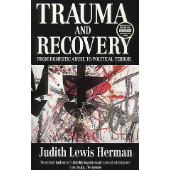
Why are so many trauma survivors, especially women, diagnosed “borderline?” Is the label useful — or sexist and degrading? How can people who live through intergenerational violence be understood and supported — instead of discounted and silenced?
Rita Marshall, human rights activist and former psychiatric inmate from a family of Holocaust survivors, examines the social and political context for the controversial “Borderline Personality Disorder” diagnosis.
Note – this is an interview with a psych survivor activist who asked at the time that her name be disguised. They recently passed away from an illness.
Bipolar Children: Sharna Olfman

Why are so many children being diagnosed bipolar? Do medications treat disease – or just keep children under control? What else can parents do when faced with difficult behavioral problems?
Sharna Olfman, Psychology Professor at Point Park University and editor of the book Bipolar Children, discusses the growing social and economic pressures to label children bipolar.
Chemical Crucifixion: Grainne Humphrys
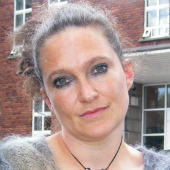
Could a young man’s overwhelming visions of Christ and apocalypse be a creative response to life trauma, rather than signs of paranoid schizophrenia? Does madness unfold differently depending on whether it is supported – or feared?
Irish activist and punk musician Grainne Humphrys, herself a survivor of an extreme state, discusses the campaign for the release of former partner John Hunt. John has been incarcerated and drugged against his will since 2005, sparking international outcry.
http://freejohn-loverevolutionary.blogspot.com
http://www.mindfreedomireland.com
Healing Veterans: Paula Caplan

How can we truly help combat veterans facing the aftermath of war? Is veteran trauma a sign of mental illness, or a healthy response to violent situations? Are medications and therapy the answer?
Paula Caplan, author of When Johnny and Jane Come Marching Home: How All of Us Can Help Veterans, discusses healing the wounds of war by listening to the stories of veterans in our communities.
http://whenjohnnyandjanecomemarching.weebly.com
http://www.paulajcaplan.net

















 Creative Commons 2.5 copyright
Recent Comments