
Neuroscience
Visionary Ecology | Steven Morgan | Madness Radio
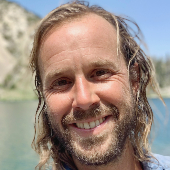
Do grieving goats lick psychedelic lichen? Altered states are part of nature, used by plants and animals for survival(!). How does ecology reveal the evolutionary – and spiritual – purpose of psychosis? Steven Morgan, psychiatric survivor and trainer in Intentional Peer Support, led the Another Way sanctuary and was project director for Soteria Vermont. Today he journeys in the wilderness to find healing and spiritual renewal, and with host Will Hall discusses psychosis as part of evolution, psychedelics in natural ecology, personal visions of Christianity, and communicating with bacteria through expanded consciousness. (Transcript) 58 min version
stevenmorganjr.com
www.madnessradio.net/madness-radio-reinventing-bipolar-steven-morgan/
Music by Steven Morgan
The World We Used to Live In by Vine Deloria Jr.
Intentional Peer Support
Soteria Vermont
Podcast: Play in new window | Download ()
Subscribe: RSS
Systems View of Life | Fritjof Capra | Madness Radio
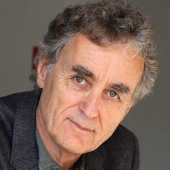
What does healthcare become when science is limited by a mechanistic, machine view of reality? How does a mechanistic view shape concepts of mental health and illness – and deny the fundamental aliveness of human beings? What does the study of living systems teach us for creating a different, more holistic vision? Fritjof Capra, theoretical physicist, systems theorist, and author of several international bestselling books including The Tao of Physics, The Web of Life, and most recently The Systems View of Life (co-authored with Pier Luigi Luisi), discusses a shift in scientific consciousness with far reaching implications for our understanding of mind and mental illness. www.fritjofcapra.net www.capracourse.net Photo: Basso Cannarsa
New Vision for Psychiatry | Jim van Os | Madness Radio
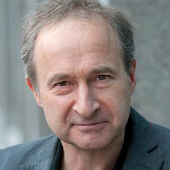
What if psychiatry recognized that schizophrenia does not exist? How might diagnostic categories (left over from the asylum era) be replaced by spectrums of experience that show how psychotic experiences can also be normal? What if services were oriented around individuals, not the statistical groups of “evidence based” research? And could the mental health system as we know it, which defines health as the absence of disease symptoms, be replaced with a new definition of health, health as empowerment in life?
Jim van Os, professor of Psychiatric Epidemiology at Maastricht University and member of the Royal Dutch Academy of Science with more than 700 publications, is one of the top one percent highly cited scientists in the world. His research combines with the experiential knowledge of people with lived experience of psychosis to envision a radically new direction for the mental health system. (Alternate 58 min version here.)
https://www.madnessradio.net/files/SchizophreniaDoesNotExist-vanOs-BMJ.pdf https://www.madnessradio.net/files/HuberHowShouldWeDefineHealthbmjd4163.pdf
http://www.brown.uk.com/schizophrenia/rossler.pdf
http://www.huffingtonpost.com/
http://bit.ly/1IYsEez
Podcast: Play in new window | Download (0.2KB)
Subscribe: RSS
Medical Coercion: Tomi Gomory
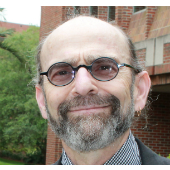
If madness isn’t like other illnesses, what is it? Should psychiatry have the power of legal coercion? How can the legacy of Thomas Szasz inform new ways of helping people?
Tomi Gomory, associate professor of social work at Florida State University and co-author of Mad Science: Psychiatric Coercion, Diagnosis, and Drugs, explores thinking beyond the medical model of emotional distress.
Unmaking Diagnosis: Gary Greenberg
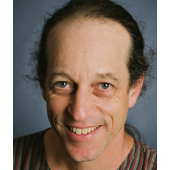
Why did the fifth edition of the Diagnostic and Statistic Manual become so controversial? Is it possible to alleviate human suffering without classifying it as a mental disorder?
Gary Greenberg, psychotherapist, author of Manufacturing Depression and The Book of Woe: The DSM and the Unmaking of Psychiatry, and journalist for Harper’s, the New Yorker, and Rolling Stone, discusses the politics behind psychiatry’s new Bible.
Meaning of Medications: David Cohen

Why does the same psychiatric drug help one person – but harm another? Do psychiatric medications “work” by chemistry alone – or through expectation, placebo, and social factors? What is the difference between prescribed medications and mind altering substances like alcohol?
David Cohen, social work professor at Florida International University and co-author of Your Drug May Be Your Problem, discusses the role of social context in constructing how we experience psychiatric medications.
http://www.criticalthinkrx.org
http://bit.ly/15tSAXH
http://rscphsw.fiu.edu/social_work/faculty_cohen.html
Beyond Biological Reductionism: Raymond Tallis
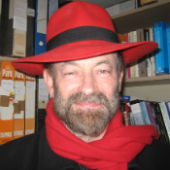
Can people’s behavior really be explained by neuroscience and our evolutionary needs as hunter-gatherers — or is this just a popular fad? Does understanding the brain really solve the mysteries of being human?
Neurologist Dr. Raymond Tallis, philosopher, Academy of Medical Sciences Fellow, and author of Why the Mind is Not a Computer and Aping Mankind: Neuromania, Darwinitis and the Misrepresentation of Humanity, exposes the bad science and faulty logic behind pop obsessions with the brain and evolutionary psychology.
http://www.raymondtallis.com
http://entertainment.timesonline.co.uk/tol/arts_and_entertainment/the_tls/article3712980.ece
http://www.newstatesman.com/culture/books/2012/09/your-brain-pseudoscience
- Show topics:
- Books
- Genetics
- Mad Science
- Neuroscience
- Philosophy
Bipolar Medication Myths: Dr Joanna Moncrieff
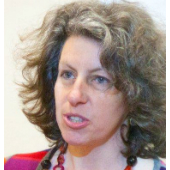
Is bipolar disorder a disease? Can medications like lithium correct chemical imbalances and stabilize mood? Do psychiatric drugs act completely differently on the brain than recreational drugs?
UK psychiatrist Dr. Joanna Moncrieff, author of The Myth Of The Chemical Cure: A Critique of Psychiatric Drug Treatment, discusses how seeing psychiatric medications as treatments for disease misleads the public about how they actually work, and obscures their potential for abuse as tools of social control.
http://www.critpsynet.freeuk.com
http://www.academyanalyticarts.org/moncrieff.htm
http://www.mentalhealth.freeuk.com/howwork.pdf
Genetic Predispositions? Jay Joseph
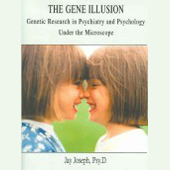
Clinical psychologist Jay Joseph details medical science’s 30-year failed quest to find any link between genetics and diagnoses of mental disorders, and debunks widely held beliefs in the psychiatric profession, including the idea of “genetic predispositions” for mental illness.
Jay is the author of The Missing Gene: Psychiatry, Heredity, and the Fruitless Search for Genes and The Gene Illusion: Genetic Research in Psychiatry and Psychology Under the Microscope.
John Horgan: “The Undiscovered Mind”
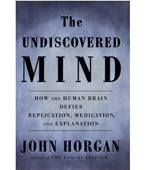
John Horgan, who has written for Scientific American, Discover, and the New York Times, talks about neuroscience, genetics, the placebo effect psychedelic drugs, and more.
John is the author of The Undiscovered Mind: How The Human Brain Defies Replication, Medication, and Explanation, Rational Mysticism, and The End of Science. He also hosts a video blog at http://www.bloggingheads.tv
- Show topics:
- Books
- Drugs
- Mad Science
- Neuroscience
- Philosophy
- Video
Richard DeGrandpre: Cult of Pharmacology
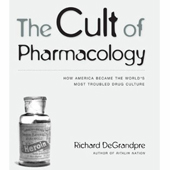
Richard DeGrandpre, former editor of Adbusters magazine and author of Ritalin Nation, discusses his new book, The Cult of Pharmacology, and how the popular conception of “addiction” behind the War On Drugs is scientifically inaccurate: social context, learning, morality and meaning determine how drugs affect us, not simple addiction chemistry.

















 Creative Commons 2.5 copyright
Recent Comments