
Police & Prisons
Sex Drugs Harm Reduction | Caty Simon | Madness Radio
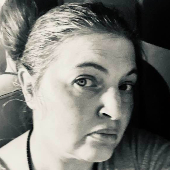
How do decriminalizing drug use and sex work advance mad liberation? What lessons can psychiatric survivors learn from the harm reduction movement? Caty Simon’s activist leadership spans the low-income rights, psychiatric survivors, sex worker, and drug users union movements, and she was a key organizer at Freedom Center in Western Massachusetts. Caty is on the leadership team of National Survivors Union (NSU), the US drug users union; is a founding co-organizer of Whose Corner Is It Anyway, a mutual aid group by and for low-income, street, and survival sex workers who use opioids and/or stimulants and/or experience housing insecurity; and leads Narcofeminism Storyshare, a collaborative autobiographical story development and key publics training stigma reduction project at NC Survivors Union, the flagship affiliate group of NSU. Caty is currently a research assistant at the Yale School of Medicine, and in 2023 received the International Drug Policy Reform Conference’s Alfred R. Lindesmith Award. Caty reunites with longtime colleagues and Madness Radio co-hosts Jacks McNamara and Will Hall to talk about psychiatric incarceration and her 20 years experience in the harm reduction movement for drug user, sex worker, and mad people liberation. (Transcript) 58 min version
To contact Caty: caty@urbansurvivorsunion.org
The principles of harm reduction, as defined by the National Harm Reduction Coalition: https://harmreduction.org/
Whose Corner Is It Anyway crowdfund: https://www.gofundme.com/f/
Caty’s research publications on Google Scholar: https://scholar.google.com/
A Contemporary Drug Problems journal article on the Narcofeminism Storyshare project: https://bit.ly/3OMVdRz
NC Survivors Union website: https://www.ncsurvivorsunion.
Caty Simon chapter in Outside Mental Health: Voices and Visions of Madness https://bit.ly/42mRWQL
A series of interviews with late Arise for Social Justice Executive Director Michaelann Bewsee, discussed in the interview, from the Smith College Collection: https://smith.hosted.panopto.
Podcast: Play in new window | Download (0.2KB)
Subscribe: RSS
Cannabis for Treating Mental Health Conditions? A Clear Yes, Maybe.
Marijuana is now legal in two states, and legal for medical use in 23 states and the District of Columbia. Polls show the majority of Americans support cannabis legalization, and more and more of the country is joining the legalization trend. As a counselor working with people diagnosed with psychosis and mental illness I am often asked about my opinion and clinical experience — as well as my personal experience — with medical cannabis.
Special Messages | Tim Dreby | Madness Radio
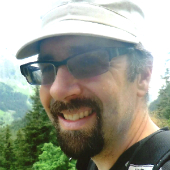
What if you were the only one seeing coded messages, covert realities, and elaborate plots all around you? Does that make you out of touch with reality, “paranoid” and “psychotic?” Or is it real — but you are just so upset that everyone thinks the problem is you instead?
Tim Dreby, a psychotherapist and author in the San Francisco Bay Area, endured a life-threatening — and real — encounter with gangsters, police, and political conspiracy. He also survived a schizophrenia diagnosis, and today leads support groups for people facing overwhelming intuitions, coded messages, and conspiracies, helping them heal from trauma and regain control of their lives. fightingforfreedominamerica.
Chemical Crucifixion: Grainne Humphrys
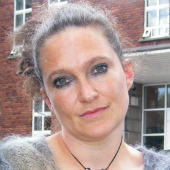
Could a young man’s overwhelming visions of Christ and apocalypse be a creative response to life trauma, rather than signs of paranoid schizophrenia? Does madness unfold differently depending on whether it is supported – or feared?
Irish activist and punk musician Grainne Humphrys, herself a survivor of an extreme state, discusses the campaign for the release of former partner John Hunt. John has been incarcerated and drugged against his will since 2005, sparking international outcry.
http://freejohn-loverevolutionary.blogspot.com
http://www.mindfreedomireland.com
Schizophrenia and Black Politics: Jonathan Metzl
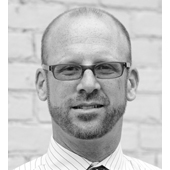
How did the definition of schizophrenia change during the civil rights and Black Power era of the 1960s? Why did a disease primarily affecting withdrawn white housewives suddenly become focused on angry and “paranoid” African American men instead?
Psychiatrist and historian Jonathan Metzl, author of The Protest Psychosis: How Schizophrenia Became a Black Disease, discusses racism and social control in psychiatric diagnosis, and how Black protest was turned into a mental disorder and psychosis was a political tool.
jmetzl(at)umich(dot)edu
http://bit.ly/byOeIw
Violent Voices: Erica van den Akker
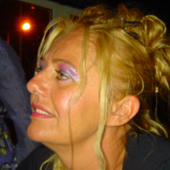
People who hear voices are no more violent than anyone else — but what about the small number of voice hearers that do actually commit violent crimes? Are medications and locked wards the best way to help those who act on their aggressive “command hallucinations?” What is the relationship between trauma, violence, and voices?
Dutch psychiatric social worker and Hearing Voices Movement member Erica van den Akker discusses her innovative counseling work with violent offenders in the Netherlands.
alpouvar1(at)tomaatnet(dot)nl
Prison Mental Health: Terry Kupers
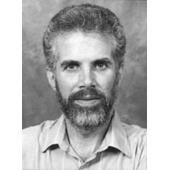
The US incarcerates more people than any country in the world – and 70% are people of color. Do we need better mental health care inside prisons — or do prisons themselves cause trauma and madness?
Psychiatrist and civil lawsuit expert witness Dr.Terry Kupers, author of Prison Madness: The Mental Health Crisis Behind Bars and What We Must Do About It, discusses overcrowding, racism, sensory deprivation, isolation, and sexual abuse in the disgraceful US prison system.
http://www.afsc.org/stopmax
http://www.criticalresistance.org
http://www.aclu.org/prisoners-rights
Forced Drugging and Treatment with Journalist Philip Dawdy

Award-winning journalist Philip Dawdy, formerly a writer with the Seattle Weekly newspaper, discusses how forced psychiatric treatment and drugging are ineffective responses to violent crime and the so-called “dangerous mentally ill.” Philip is the writer of the excellent blog about Big Pharma profiteering and mental health policy
Portland Police Training w/ Julie Diamond

After James Chasse, a man with a schizophrenia diagnosis, was killed by Portland police in 2006, reforms included improved police training. Julie Diamond discusses efforts to help teach police better de-escalation and conflict resolution techniques as an alternative to force and violence.
Check out http://www.mentalhealthportland.org, http://www.juliediamond.net, and another audio interview with Julie at http://www.katejobe.com/podcast.html
Virginia Tech Icarus Project Dialog

Icarus Project organizers Madigan Shive, Molly Sprengelmeyer, Will Hall, Neil Gong, and Sascha DuBrul visit Virginia Tech, site of the violent tragedy, and discuss campus mental health issues with students.
Richard DeGrandpre: Cult of Pharmacology
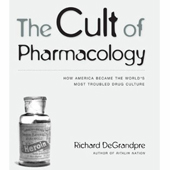
Richard DeGrandpre, former editor of Adbusters magazine and author of Ritalin Nation, discusses his new book, The Cult of Pharmacology, and how the popular conception of “addiction” behind the War On Drugs is scientifically inaccurate: social context, learning, morality and meaning determine how drugs affect us, not simple addiction chemistry.
Restorative Justice w/ Rockdove Collective

Danielle, who works with a New York City policy NGO and is part of the activist Rockdove Collective, discusses the international Restorative Justice movement, creating effective mediation and community dialog as alternatives to the punitive prison-industrial complex criminal justice system. Danielle specifically focuses on using Restorative Justice for violent and serious crimes.
Check out www.rockdovecollective.org and www.restorativepractices.org
Police Violence: Jim Chasse, Portland Oregon

Portland Oregon police were exonerated after they beat and killed without provocation or cause Jim Chasse, a man labeled with schizophrenia.
- Show topics:
- Human Rights
- Police & Prisons
John Judge: Government Mind Control
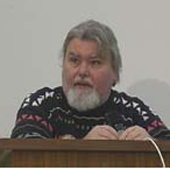
John Judge was active in the 1970s psychiatric survivor movement and is now special assistant to Congressperson Cynthia KcKinney. John discusses MKULTRA and other US psychiatric mind control experiments, which involved torture of thousands of mental patients. Judge also looks at the Jonestown massacre, LSD, and the convergence of Nazism with the roots of biomedical psychiatry.

















 Creative Commons 2.5 copyright
Recent Comments