
Diagnostic Labels
Compassionate Therapy | Michael Montgomery | Madness Radio
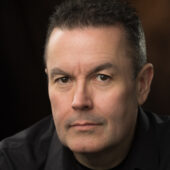
Can psychotherapy work against the mainstream system? What does it take to be truly compassionate as a professional? And what are the downsides of promising alternatives such as Open Dialogue? Michael Montgomery grew up in Ireland and experienced firsthand the impacts of trauma and violence; a meeting with a visionary friend introduced him to psychiatric oppression. Today he is an existential psychoanalyst in the tradition of R.D. Laing and trained in Open Dialogue, and he joins Madness Radio guest producer Nicki Glasser and host Will Hall to discuss his work. (transcript) (58 min version) www.drmontgomery.com
Podcast: Play in new window | Download (0.2KB)
Subscribe: RSS
Grand Rounds UCSF Psychiatry – Will Hall – Madness Radio

Will Hall’s June 2024 Grand Rounds talk at University of California San Francisco Department of Psychiatry and Behavioral Sciences – where he was locked up as a young man! – titled “New Visions of Psychosis: Abolition as Clinical Best Practice.” Revenge is a dish best served cold. Video here: https://youtu.be/adYrzmJ2w50?si=nwAQBM2F6oYmbShe transcript here. 58 min version
Podcast: Play in new window | Download (0.2KB)
Subscribe: RSS
Rethinking Therapy | Will Hall and Ryan Hofrichter | Madness Radio
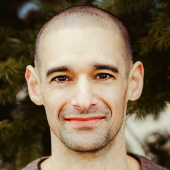
Therapist Ryan Hofrichter flips the mic on Madness Radio host Will Hall for a wide-ranging discussion about madness, psychiatry, and being a therapist. Topics include power in therapy, psychiatric diagnosis harms, naming ethical and professional dilemmas, working outside of the mainstream mental health system, understanding emotional distress in context, tragedy as potentially transformative, the psychiatric survivor movement, preventing mental health crises by creating healthy communities… and more. Thanks Ryan for listening! (58 min version)
Full interview transcript and details on Ryan’s website here.
Podcast: Play in new window | Download (0.2KB)
Subscribe: RSS
Decolonizing Early Psychosis | Rachel Jane Liebert | Madness Radio
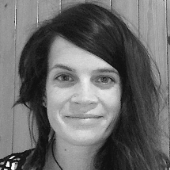
Do early psychosis programs serve healing – or function as surveillance and control? Are treatments for paranoia actually themselves forms of paranoia, based on scientific racism and white supremacy? By defining and enforcing “normal” does psychiatry wage a war on the imagination?
Rachel Jane Liebert is a multi-media artist and Critical Psychology senior lecturer at the University of East London, using feminist research to decolonize modern psychiatry. Her new book Psycurity: Colonialism, Paranoia, and the War on Imagination brings her background as a Pakeha (white/settler) New Zealander to free madness from whiteness and express the imaginative potential of states labeled paranoia. 58 min version
https://bit.ly/2ohWcQI
https://racheljaneliebert.com/
https://uel.academia.edu/racheljaneliebert
Podcast: Play in new window | Download (0.2KB)
Subscribe: RSS
Compassionate Psychotherapy | Olga Runciman | Madness Radio
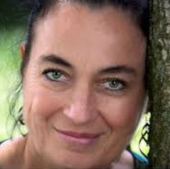
How is psychotherapy different when the therapist is also a survivor? What vital lessons must therapists learn from people who have experienced psychosis? If therapy is an imbalance of power between therapist and patient, how can therapists avoid the misuse of power and protect clients from harm? Olga Runciman, voice hearer, psychiatric nurse in locked wards, and survivor of a diagnosis of paranoid schizophrenia, brings her experience with recovery to her work as a psychotherapist in private practice.
Queer Teen Pregnancy | Nina Packebush | Madness Radio
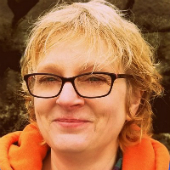
What’s it like to be a teenager in a psychiatric hospital? What’s it like to be a queer pregnant teenager? And is it true that friends do make the best medicine? Nina Packebush explores these questions and more in her groundbreaking debut young adult novel, Girls Like Me. Girls Like Me is an In the Margins 2018 recommended book and a Lambda Literary Finalist. Nina is a queer-identified, grown-up teen mom, writer, zine maker, and mental health advocate – as well as Madness Radio Producer. www.ninapackebush.com
www.wehaveraisedpresidents.org
Legacy of R.D. Laing | Michael Guy Thompson | Madness Radio

Is psychosis a journey and a breakthrough to somewhere more authentic? Should unhappy people be made to adjust to a mad society? Scottish psychiatrist R.D. Laing was a fierce critic of the mental health system, and saw madness as a rational adaptation to irrational family and social constraints. Laing’s compelling prose, acute intellect, and spiritual insight made a huge cultural impact worldwide, shaping the psychiatric survivor movement and calling to overturn social conventions during the U.S. war in Vietnam and the revolutionary 1960s. How are Laing’s provocative insights about politics and culture still relevant today?
Michael Guy Thompson, a psychoanalyst and founder of the Gnosis Retreat Center, worked with R.D. Laing in London and has created hospital alternative sanctuaries for people struggling with experiences called psychosis. He directs the annual R.D. Laing in the 21st Century Symposium at Esalen Institute. www.gnosisretreatcenter.org www.michaelguythompson.com
www.rdlaingsymposium.com
New Vision for Psychiatry | Jim van Os | Madness Radio

What if psychiatry recognized that schizophrenia does not exist? How might diagnostic categories (left over from the asylum era) be replaced by spectrums of experience that show how psychotic experiences can also be normal? What if services were oriented around individuals, not the statistical groups of “evidence based” research? And could the mental health system as we know it, which defines health as the absence of disease symptoms, be replaced with a new definition of health, health as empowerment in life?
Jim van Os, professor of Psychiatric Epidemiology at Maastricht University and member of the Royal Dutch Academy of Science with more than 700 publications, is one of the top one percent highly cited scientists in the world. His research combines with the experiential knowledge of people with lived experience of psychosis to envision a radically new direction for the mental health system. (Alternate 58 min version here.)
https://www.madnessradio.net/files/SchizophreniaDoesNotExist-vanOs-BMJ.pdf https://www.madnessradio.net/files/HuberHowShouldWeDefineHealthbmjd4163.pdf
http://www.brown.uk.com/schizophrenia/rossler.pdf
http://www.huffingtonpost.com/
http://bit.ly/1IYsEez
Podcast: Play in new window | Download (0.2KB)
Subscribe: RSS
Communicating With Psychosis | Dina Tyler

Are there ways to reach people in states of madness? How do talking with ghosts, hearing voices, and seeing visions — as well as enduring family turmoil — relate to psychotic crisis?
When Dina Tyler discovered the meaning of life in an altered state, the treatment she received only inflicted further trauma. Dina instead embraced her madness as a guiding force for recovery, and found a way to leave labels and medications behind. Today she works as a counselor to youth experiencing psychosis, communicating across different realities with people driven away from traditional care.
Dina is the co-director of the Bay Area Mandala Project, co-founder of Bay Area Hearing Voices, and works with an early psychosis intervention program in Alameda County, California. She was awarded Peer Specialist of the Year by the National Council for Behavioral Health in 2015!
Healing Connection | Lauren Spiro
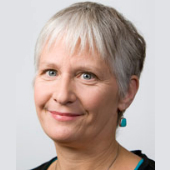
How do we recover from childhood violence? When Lauren Spiro was 14, her father was murdered. Eighteen months later, she began to have unusual spiritual experiences and was diagnosed with schizophrenia. Today she works to promote peace and healing in communities, fulfilling the vision she had in her extreme state.
Lauren is co-director of Emotional CPR, associate director of the National Coalition for Mental Health Recovery, and her new memoir is Living For Two: A Daughter’s Journey from Grief and Madness to Forgiveness and Peace.
http://laurenspiro.wordpress.com
www.ncmhr.org
www.emotional-cpr.org
Redefining Research: Nev Jones

What if researchers collaborated with patients rather than treating them as “informants” and objects of study? Nev Jones survived her mother’s frightening extreme states — and then her own mind unravelled into different realities. She was herself diagnosed with schizophrenia, and began a lifelong exploration of the uniqueness of madness.
Today Nev is a post-doctorate fellow at Stanford University, founder of Chicago Hearing Voices and the Lived Experience Research Network, and part of the the movement to create alternatives to professional control of research on psychosis.
http://depaul.academia.edu/NevJones
http://www.chicagohearingvoices.org
Medical Coercion: Tomi Gomory
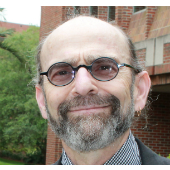
If madness isn’t like other illnesses, what is it? Should psychiatry have the power of legal coercion? How can the legacy of Thomas Szasz inform new ways of helping people?
Tomi Gomory, associate professor of social work at Florida State University and co-author of Mad Science: Psychiatric Coercion, Diagnosis, and Drugs, explores thinking beyond the medical model of emotional distress.
Understanding Borderline Trauma: Rita Marshall
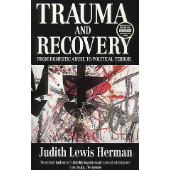
Why are so many trauma survivors, especially women, diagnosed “borderline?” Is the label useful — or sexist and degrading? How can people who live through intergenerational violence be understood and supported — instead of discounted and silenced?
Rita Marshall, human rights activist and former psychiatric inmate from a family of Holocaust survivors, examines the social and political context for the controversial “Borderline Personality Disorder” diagnosis.
Note – this is an interview with a psych survivor activist who asked at the time that her name be disguised. They recently passed away from an illness.
Benzodiazepine Recovery: Matt Samet
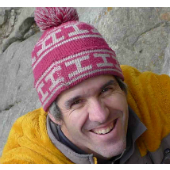
Are Xanax, Klonopin, Ativan and other benzodiazepines really more addictive than heroin? How can these common drugs for anxiety actually worsen the symptoms they’re prescribed to treat? What are the dangers of protracted withdrawal?
Matt Samet, former professional rock climber, Outside Magazine writer, and author of Death Grip: A Climber’s Escape From Benzo Madness, discusses his recovery journey from psychiatric drug addiction.
http://us.macmillan.com/deathgrip/MattSamet
http://www.madinamerica.com/2013/05/matt-samet-climbing-out/
Elders and Forgetfulness: Stan Tomandl
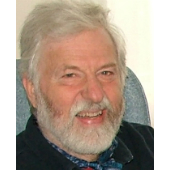
Are elders living with forgetfulness, Alzheimer’s, and dementia unreachable? Are there parallels with states called psychotic? Can meaning be found in the confusion of brain injury and coma?
Stan Tomandl, MA, DiplPW and author of Coma Care & Palliative Work, and An Alzheimer’s Surprise Party: Unveiling the Mystery, Inner Experience, and Gifts of Dementia, explores communicating with memory loss and how to make an end of life transition with dignity.

















 Creative Commons 2.5 copyright
Recent Comments