
Diagnostic Labels
Unmaking Diagnosis: Gary Greenberg
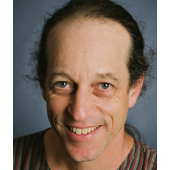
Why did the fifth edition of the Diagnostic and Statistic Manual become so controversial? Is it possible to alleviate human suffering without classifying it as a mental disorder?
Gary Greenberg, psychotherapist, author of Manufacturing Depression and The Book of Woe: The DSM and the Unmaking of Psychiatry, and journalist for Harper’s, the New Yorker, and Rolling Stone, discusses the politics behind psychiatry’s new Bible.
Politics of Language: Sera Davidow

How do psychiatric labels shape our perceptions of others – and ourselves? Are there better ways to understand emotional distress? Does the “peer movement” offer real alternatives — or present new problems? Sera Davidow, psychiatric survivor, director of the peer-run Western Mass Recovery Learning Community (RLC), and co-producer of the new film “Beyond the Medical Model,” discusses the politics of language and innovative programs to truly help people in distress.
http://www.westernmassrlc.org
http://www.madinamerica.com/author/sdavidow/
Meaning of Medications: David Cohen

Why does the same psychiatric drug help one person – but harm another? Do psychiatric medications “work” by chemistry alone – or through expectation, placebo, and social factors? What is the difference between prescribed medications and mind altering substances like alcohol?
David Cohen, social work professor at Florida International University and co-author of Your Drug May Be Your Problem, discusses the role of social context in constructing how we experience psychiatric medications.
http://www.criticalthinkrx.org
http://bit.ly/15tSAXH
http://rscphsw.fiu.edu/social_work/faculty_cohen.html
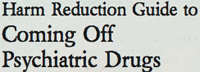
Coming Off Psych Meds: Laura Delano
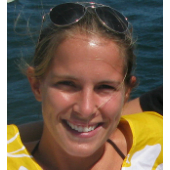
What do you do when medications for your emotional problems become worse than the problems themselves? Laura Delano went to a psychiatrist at age 18, and for the next decade was prescribed nineteen different psychiatric drugs. After devastating physical and emotional effects, she began a journey to become medication free — and re-discover who she is. What lessons did she learn?
Laura blogs regularly about her experiences at Mad in America, works for a mental health agency in Massachusetts, and is an advocate for drug alternatives and safe withdrawal.
http://www.madinamerica.com/author/ldelano/
(Link to coming off meds guide: http://willhall.net/comingoffmeds/)
Meaning From Voices: Eleanor Longden
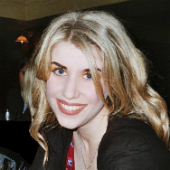
Hearing voices is strongly connected with traumatic experiences, but are voices a brain malfunction or a creative strategy for protection?
UK psychologist Eleanor Longden survived a diagnosis of paranoid schizophrenia and went on to be a leading researcher around voice hearing, trauma, and dissociation. She is a pioneer in the movement to understand voices as a normal human experience — and truly help people by healing trauma.
http://ind.pn/3ltxoe
http://bit.ly/NjDA77
http://bit.ly/z01Fhn
Bipolar Children: Sharna Olfman

Why are so many children being diagnosed bipolar? Do medications treat disease – or just keep children under control? What else can parents do when faced with difficult behavioral problems?
Sharna Olfman, Psychology Professor at Point Park University and editor of the book Bipolar Children, discusses the growing social and economic pressures to label children bipolar.
Healing Veterans: Paula Caplan
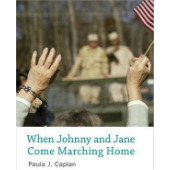
How can we truly help combat veterans facing the aftermath of war? Is veteran trauma a sign of mental illness, or a healthy response to violent situations? Are medications and therapy the answer?
Paula Caplan, author of When Johnny and Jane Come Marching Home: How All of Us Can Help Veterans, discusses healing the wounds of war by listening to the stories of veterans in our communities.
http://whenjohnnyandjanecomemarching.weebly.com
http://www.paulajcaplan.net
Dignity of Elders: Carole Hayes-Collier
Why are nearly a third of all elders in nursing homes given anti-psychotic drugs, despite life threatening side effects? Are medications being used as chemical restraints? Can nursing homes be places of dignity — or should they be abolished?
Carole Hayes-Collier was diagnosed schizophrenic at 19 and left to a lifetime of hospitalization. When she recovered, the abuses she witnessed inspired her to join the Gray Panthers and dedicate her life to elder rights and mental health.
http://graypanthers.org
http://online.wsj.com/article/SB119672919018312521.html
http://www.canhr.org/stop-drugging
Talking About Suicidal Feelings: David Webb

How common are suicidal feelings? Is a psychiatric illness behind suicidal despair — or a meaningful and even spiritual life crisis? Does forced hospitalization really provide help?
Suicide attempt survivor David Webb, author of Thinking About Suicide: Contemplating and Comprehending the Urge to Die, discusses how speaking openly about suicidal feelings, rather than reacting with panic and fear, is the best form of suicide prevention.
http://www.jungcircle.com/DWebb.html
http://thinkingaboutsuicide.org
Exporting Mental Disorders: Ethan Watters
How did pharmaceutical giant Glaxo Smith Kline create “depression” in Japan — and a billion dollar market for its anti-depressant drug Paxil? Why do people diagnosed with schizophrenia recover more in Tanzania than they do in the US? Can western-style psychotherapy help tsunami survivors in Sri Lanka?
Ethan Watters, author of Crazy Like Us: The Globalization of the American Psyche, discusses how mental disorders are cultural products, defined in the US and then exported around the world.
Meanings of Madness: Gail Hornstein
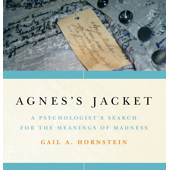
Seamstress Agnes Richter was locked away in a mental asylum in the 1890s, and was so determined to have a voice that she embroidered her personal story onto the jacket she wore on the ward. What is the hidden history of people writing their own narratives of going insane? How important is it to listen to the experiences of “mentally ill” people? Is there meaning in madness?
Gail Hornstein, Mt. Holyoke College professor and author of Agnes’s Jacket: A Psychologist’s Search for the Meanings of Madness, discusses the work of the Hearing Voices Movement in the UK, peer run support communities including Freedom Center in the US, and why professionals should let patients speak for themselves.
Icarus Project: Sascha DuBrul
How did the New York underground of punk rock music, squatting, and homeless protest give rise to a thriving and innovative peer-run mental health community? Are there creative gifts to be found in the depths of madness? Does the future of Mad Pride lie in the joining of activism with spirituality?
Icarus Project co-founder Sascha Altman DuBrul discusses his escape into apocalyptic visions and psychiatric hospitals, and how he was inspired to challenge the identity of bipolar disorder.
scatter(at)theicarusproject(dot)net
http://www.theicarusproject.net
Bipolar Medication Myths: Dr Joanna Moncrieff
Is bipolar disorder a disease? Can medications like lithium correct chemical imbalances and stabilize mood? Do psychiatric drugs act completely differently on the brain than recreational drugs?
UK psychiatrist Dr. Joanna Moncrieff, author of The Myth Of The Chemical Cure: A Critique of Psychiatric Drug Treatment, discusses how seeing psychiatric medications as treatments for disease misleads the public about how they actually work, and obscures their potential for abuse as tools of social control.
http://www.critpsynet.freeuk.com
http://www.academyanalyticarts.org/moncrieff.htm
http://www.mentalhealth.freeuk.com/howwork.pdf
Schizophrenia and Black Politics: Jonathan Metzl
How did the definition of schizophrenia change during the civil rights and Black Power era of the 1960s? Why did a disease primarily affecting withdrawn white housewives suddenly become focused on angry and “paranoid” African American men instead?
Psychiatrist and historian Jonathan Metzl, author of The Protest Psychosis: How Schizophrenia Became a Black Disease, discusses racism and social control in psychiatric diagnosis, and how Black protest was turned into a mental disorder and psychosis was a political tool.
jmetzl(at)umich(dot)edu
http://bit.ly/byOeIw
Open Dialogue Alternative: Mary Olson
Is a ‘psychotic’ crisis inside one person’s mind — or does it happen between people, in their relationship? Can therapy untangle the web of madness by addressing the family, providers, and entire social network?
Smith College social worker and Fulbright scholar Mary Olson discusses the innovative work of Jaakko Seikkula and colleagues’ Open Dialogue Approach in Finland, which has achieved dramatic success helping people through extreme states labeled ‘psychosis’ and ‘schizophrenia’ — while relying much less on medication and hospitalization.
http://www.dialogicpractice.net
http://beyondmeds.com/2010/01/04/alternative-for-psychosis
http://www.willhall.net/opendialogue

















 Creative Commons 2.5 copyright
Recent Comments