Author Archives: Will Hall

Mary Olson

Open Dialogue Alternative: Mary Olson

Is a ‘psychotic’ crisis inside one person’s mind — or does it happen between people, in their relationship? Can therapy untangle the web of madness by addressing the family, providers, and entire social network?

Smith College social worker and Fulbright scholar Mary Olson discusses the innovative work of Jaakko Seikkula and colleagues’ Open Dialogue Approach in Finland, which has achieved dramatic success helping people through extreme states labeled ‘psychosis’ and ‘schizophrenia’ — while relying much less on medication and hospitalization.

http://www.dialogicpractice.net
http://beyondmeds.com/2010/01/04/alternative-for-psychosis
http://www.willhall.net/opendialogue

Erica van den Akker

Violent Voices: Erica van den Akker

People who hear voices are no more violent than anyone else — but what about the small number of voice hearers that do actually commit violent crimes? Are medications and locked wards the best way to help those who act on their aggressive “command hallucinations?” What is the relationship between trauma, violence, and voices?

Dutch psychiatric social worker and Hearing Voices Movement member Erica van den Akker discusses her innovative counseling work with violent offenders in the Netherlands.

alpouvar1(at)tomaatnet(dot)nl

Terry Kupers

Prison Mental Health: Terry Kupers

The US incarcerates more people than any country in the world – and 70% are people of color. Do we need better mental health care inside prisons — or do prisons themselves cause trauma and madness?

Psychiatrist and civil lawsuit expert witness Dr.Terry Kupers, author of Prison Madness: The Mental Health Crisis Behind Bars and What We Must Do About It, discusses overcrowding, racism, sensory deprivation, isolation, and sexual abuse in the disgraceful US prison system.

http://www.afsc.org/stopmax
http://www.criticalresistance.org
http://www.aclu.org/prisoners-rights

New Monthly Format — One Hour and 30 Minute Versions

Hi everyone, because of limited resources Madness Radio is going on a monthly format for a while. Without any funding coming in I can’t currently financially manage to produce the show more often.

I’m also preparing two versions of the monthly show — the regular hour long version you’ll see listed with the other shows and on the podcast feed, and a special 30 minute version with the same guest. KBOO in Portland is running the 30 minute version monthly, and if you or your station would like the 30 minute version as well just email radio(at)madnessradio.net and I’ll set that up for you.

Not sure how long I’ll be at monthly, but I hope to return to more frequent episodes at some point soon. Keeping Madness Radio going is a great deal of work, so if you can make a tax-deductible donation, or have any ideas of partner organizations or financial resources, please get in touch I’d love to hear your ideas!

Happy almost spring

~~~ Will Hall, Producer and Host, Madness Radio

Catherine Penney

Schizophrenia Psychotherapy: Catherine Penney

Can a severe, chronic case of “schizophrenia” ever recover? Is psychotherapy an alternative to medications? What role does trauma play in madness?

Hear the inspiring story of how Catherine Penney, RN, was catatonic and locked in a hospital back ward for years, and then emerged to create a new alternative healing community.

http://www.dantescure.com
http://www.desertgathering.com
http://www.iraresoul.com/dvd.html

NPR Morning Edition Features Madness Radio Interview with Judi Chamberlin

National Public Radio’s Morning Edition just did a piece on Judi Chamberlin that uses the interview Madness Radio did with her in 2006; here’s the text of the story and you can listen to it on the NPR site (or listen to the entire Judi Chamberlin interview on Madness Radio here:

https://www.madnessradio.net/madness-radio-judi-chamberlin-psychiatric-survivor-movement

Advocate For People With Mental Illnesses Dies
by Joseph Shapiro

http://www.npr.org/templates/story/story.php?storyId=122706192

Judi Chamberlin, who died this weekend at age 65, was a civil rights hero from a civil rights movement you may have never heard of. She took her inspiration from the heroes of other civil rights movements to start something she liked to call Mad Pride — a movement for the rights and dignity of people with mental illness.

It started in 1966, when Chamberlin was 21 years old and seeing her doctor because she was dealing with a deep depression. “After a while, he suggested I sign myself into a hospital because I was just not functioning, I was so depressed. And I just thought, ‘Oh a hospital’s a place where you get help.’ And you know, I’d been in hospitals for surgery and things like that, and didn’t think of it as having anything to do with your fundamental rights. So I just said, ‘OK, I’ll try it.'”

Chamberlin told her story in a 2006 interview with Will Hall, host of Madness Radio, a program by people like Chamberlin who call themselves “psychiatric survivors.”

“And very quickly, [I] found out that once you sign papers to go in on a voluntary basis, but then you can’t leave when you want to leave, which was absolutely shocking to me,” she said.

She got out of that state hospital and moved to Vancouver, British Columbia, where she lived with other people who’d been diagnosed with mental illness but who’d then gotten government money to develop their own treatments. She recovered and eventually moved to Boston, where she started working with other former American patients who wanted to change the system. They called themselves the Mental Patients Liberation Front.

“When I arrived at this storefront in Cambridge, Mass., I was a senior Harvard student, had been locked up five times, so I was referred by Harvard to volunteer there,” recalls David Oaks, who came to the group in 1976. “And I walked in, and it was a little radical ragtag group, Mental Patients Liberation Front. And Judi was right in the thick of folks, just really warm, community organizer.”

Oaks now runs his own advocacy group, MindFreedom International. Chamberlin was a mentor. “One thing she immediately helped teach a lot of people was basic 101 about mental health liberation: That we’re equal; that we have rights.”

One thing she immediately helped teach a lot of people was basic 101 about mental health liberation: That we’re equal; that we have rights.- David Oaks, of MindFreedom International.

Chamberlin put that basic thinking into a book called On Our Own, which published in 1978. In it, she argued that, as she’d experienced in Canada, just the ability to have some say in your own treatment was a key part of making that treatment work.

Chamberlin’s book became a manifesto for other patients. But it influenced lots of people in the mental health establishment, too. Today, notes Oaks, it’s common for people with mental illness to have a say. “Most U.S. states now have an office of mental health consumer affairs or something to hear the voice of mental health clients,” says Oaks. “And it certainly is people like Judi that did that.”

Robert Whitaker, the author of Mad in America, a history of the treatment of people with mental illness in America, says Chamberlin was “a seminal figure in the rise of the consumer movement.” She was able to get across the patient’s point of view in a way that was strong, but also clear. And that appealed to people in the mental health field who were often the target of her criticism.

“Judi was fierce, incredibly fierce,” says Whitaker. “And by that I mean she knew her mind, she spoke her mind, and she didn’t worry if she offended people who were listening.”

Chamberlin, he says, was irreverent, “brilliant” and “a joy to be around.” He also says she was “incredibly brave,” because “it obviously takes a lot of bravery to confront a society that’s had a different belief before.”

Chamberlin told people with mental illness that they were, like everyone else, people with quirks and differences, but with strengths and abilities, too. She wanted people to reclaim the description “mad” as something that was OK.

“She changed it from a word that was a pejorative word,” says Whitaker. “That was saying to the world at large: We are worthy individuals, and our minds our worthy, and they’re to be respected.”

Chamberlin even used “mad pride” as her e-mail address. “And you can see the historical echoes with ‘black pride’ as well,” says Whitaker. “It absolutely followed in the footsteps of the civil rights movement.”

Chamberlin traveled the world as an advocate, even in the months before her death. She worked at Boston University on mental health issues and started a center with federal funding to support other psychiatric survivors.

More recently, Chamberlin faced another illness: lung disease. And last year, when her insurance company told her she’d exhausted her hospice benefit, she faced going into a nursing home. She started a blog she called Life as a Hospice Patient about her fight to die at home.

Late Saturday night, she died as she wished: at home, in her favorite chair, surrounded by friends and family.

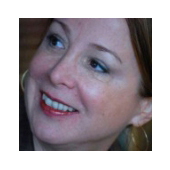
Judi Chamberlin — Always With Us

Judi ChamberlinMovement visionary and activist firebrand Judi Chamberlin will always be with us in spirit. She was a longtime friend and will be deeply missed.
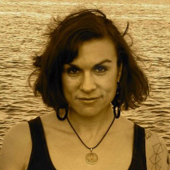
She recently wrote:

I don’t believe in an afterlife; I think when I die it will just be a return to the same nothingness as before my birth. I believe that the only ‘afterlife’ is the way one lives on in people’s memories, and it has been so gratifying to me to hear from so many people who appreciate the work I’ve done and the positive effect I’ve had on their lives. So I feel confident that I will live on in the memories of many, many people, and that thought gives me great comfort.

You can listen to a great interview with Judi here: https://www.madnessradio.net/madness-radio-judi-chamberlin-psychiatric-survivor-movement”

Update: National Public Radio used clips from the Madness Radio interview with Judi for their radio and website profiles.

Leah Harris

Survivor Spoken Word: Leah Harris

Leah Harris was orphaned after both parents were diagnosed with schizophrenia and died from medication toxicity. Today she is a leading voice in survivor activism, and her powerful spoken word poetry, including “I Was A Teenage Mental Patient,” has been featured in publications including Word Warriors: 35 Women Leaders in the Spoken Word Revolution, and DC Poets against the War: An Anthology. Leah is also the co-coordinator of the US Network of Users and Survivors of Psychiatry.

Buy her new cd “Take Refuge” at the National Empowerment Center: http://bit.ly/7f5kyN

http://www.myspace.com/dharmamamaleah
http://www.usnusp.org

Brian Hartnett

Ireland Voices: Brian Hartnett

Can recreational drugs be an opening to genuine spiritual awakening? Brian Hartnett’s passion for rave dance music — as well as alcohol and ecstasy — cost him his career.

Doctors labeled his paranoia, telepathy, and voices symptoms of schizophrenia. But Brian went on to become one of the founders of Hearing Voices Ireland, and discover a new, heightened spirituality.

http://www.voicesireland.com

Recovery Learning Communicty

Recovery and Diagnosis: Lisa Darbyshire

How can a chaotic and oppressive family life lead to trauma and extreme states? Do medications and diagnosis provide help, or can they make things worse?

Psychiatric abuse survivor Lisa Darbyshire, Massachusetts organizer with the Freedom Center and the Recovery Learning Community, discusses her personal experiences of hospitalization and recovery, including the struggle with learned helplessness and dependence.

http://www.freedom-center.org
http://www.westernmassrlc.org

INTAR Rethinking Psychiatric Crisis – First Breaks (Audio + Photos)

INTAR2009-WillHallI presented at the Rethinking Psychiatric Crisis: Alternative Responses to First Breaks conference in New York City. The conference joined more than 200 researchers, people with psychiatric diagnoses, policymakers, clinicians, advocates, and family members from several countries including Finland and the UK.

The focus was how to understand and promote the growing number of effective and well researched residential alternatives to hospitals, medications, and labeling for people in severe crisis, including Soteria House, Open Dialog, the Runaway House, and the Parachute Project. Check out the slideshow, and more info at the International Network Towards Alternatives for Recovery website. Photos: Brian McKinnon

You can listen to my keynote speech, Why we need alternatives,” here:
https://www.madnessradio.net/audio-extra/WillHallINTAR2009.mp3

Also check the #intar tag on Twitter and on the Portland Hearing Voices Twitter feed: twitter.com/pdxvoices


Created with Admarket’s flickrSLiDR.

Ari Ne'eman

Autism Self Advocacy: Ari Ne’eman

What does it mean to be autistic, have Asperger’s, or be on the autism spectrum? Is autism a disease to be overcome, or a difference to be embraced? Is autism advocacy like mad pride activism?

Ari Ne’eman, a person on the autism spectrum and director of the Autism Self Advocacy Network, discusses the autism movement’s challenge to what we consider “normal.”

http://www.autisticadvocacy.org

Rethinking Psychiatric Crisis: Alternative Responses to “First Breaks” Conference

Join INTAR for our 5th annual conference on November 23rd at New York University’s Kimmel Center — Rethinking Psychiatric Crisis: alternative responses to “first breaks.” I’ll be presenting, as will Oryx Cohen, Bonfire Madigan Shive, and others.

INTAR will bring experts in Alternatives to New York City from around the world to describe and discuss current alternatives to hospitalization for psychiatric crises.

Download the flyer here: INTARConferenceFlyer2009.NYC.pdf

Dr Peter Breggin

Conscience of Psychiatry: Peter Breggin

What do modern psychiatric drug treatments have in common with lobotomy? Is informed consent possible when patients’ judgment is impaired by medication? Should psych drugs be banned?

For more than 50 years Dr. Peter Breggin has been a leading crusader against psychiatric abuse, Big Pharma, and medication dangers. His latest book is The Conscience of Psychiatry: The Reform Work of Peter R. Breggin, MD.

http://www.breggin.com