 The FDA hearings turned out very positively for the anti-electroshock movement, you can read more here:
http://www.washingtonpost.com/wp-dyn/content/article/2011/01/28/AR2011012806328.html
This is the public comment I submitted to the FDA panel:
I am a therapist, advocate, and have recovered from a diagnosis of schizophrenia. Please listen to the voices of people harmed by ECT and limit its use, and put ECT devices in a more restricted category as a step towards ECT’s elimination.
My father lost memory, lost parts of his personality, and was deeply traumatized by his ECT treatments. His suffering caused great damage to our family. As a therapist I have met many clients also harmed, and as an advocate and public speaker I have met many more. There is a worldwide movement against ECT which deserves to be heard – in what other area of medicine does a treatment generate such strong opposition from people who have received it? Ignoring this outcry is a shameful throwback to the era of lobotomy and insulin coma therapy, when patient’s experience was routinely disregarded.
ECT was recommend to me when “all other treatments had failed,” yet the hospital had not even begun to try any alternative treatments, they had only tried a series of medications. There is an abundance of effective and safe alternatives to ECT that deserve support. ECT device manufacturers have a long history of improper influence on the science and regulation surrounding ECT, and industry manipulation deeply corrupts research claims of ECT effectiveness (as discussed in Linda Andre’s excellent book Doctors of Deception).
Short term benefits are attributable to the paradoxical effects of head injury, placebo, and expectations by providers. There is no research evidence of any kind that ECT treats or corrects any disease process. Do not be part of the same historic blunder that medicine made when lobotomy was widely supported and even earned its inventor the Nobel Prize. Do not go along with biased and inaccurate research and industry advocates. Do not ignore the overwhelming evidence that ECT is harmful. Move to limit the use of ECT, classify the devices in a more restricted way, and work towards elimination of ECT.
— Will Hall

 Will Hall of Madness Radio hosts Talk Radio on KBOO 90.7FM In Portland Oregon. His guest is a former Oregon State Hospital patient now living in the community under the Psychiatric Security Review Board (PSRB) after taking the “guilty except for insanity” plea. The show discusses how the antiquated PSRB system needs to be reformed.
  Will Hall presento una taller en español llamada “Nuevas Perspectivas Sobre Bipolar y Esquizofrenia,” como parte de la Dia De Salud Mental Latina y Bienestar Familiar en Portland Oregon.
  “Madness and Mental Diversity: Psychosis, Bipolar, and Schizophrenia As Field Evolution” was a free talk on Process Work and psychosis I was invited to give at the local
  Jen Gouvea and Kent Bye joined Will Hall on 12-09-11 for a KBOO FM 8-9am Talk Radio call-in show, with the topic “Surviving Holiday Season Family Conflict.” We took phone-in calls and gave ideas about how to deal with family difficulties in a time that’s stressful for many people. (The poster appeared in our dreamscape a couple of days later when we went to see Hugo!)
 Process Work faculty member Joe Goodbread has extensive experience working with extreme states of consciousness from a non-pathologizing and deeply compassionate perspective. This workshop recording is from the 2011 INTAR (
 On November 11 2011 Will Hall hosted KBOO’s Talk Radio live from Occupy Portland at the encampment at Chapman square, the day before the police eviction of the camp.
 After Robert Whitaker’s visit to Oregon last year several of us in the peer recovery mental health movement worked together to create a statement about medication use and alternatives.
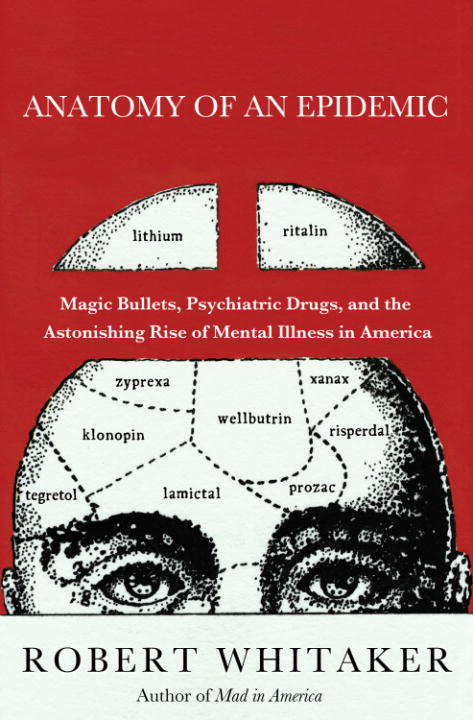 More than 450 people filled the Unitarian Church in Portland Oregon February 10th for the Rethinking Psychiatry event. Robert Whitaker keynoted the evening, followed by a panel with Beckie Child, Director of the Mental Health America of Oregon; Cindi Fisher, Movement of Mothers Standing – Up -Together: Taking Back Our Children; Chris Gordon, Assistant professor of Psychiatry at Harvard Medical School, Medical Director of Mental Health Advocacy; Gina Nikkel, Director of the Oregon Association of Community Mental Health Programs; and Will Hall, Director of Portland Hearing Voices.
 I hosted the early morning drive time Talk Radio show on KBOO here in Portland on Jan. 17, celebrating Dr. Martin Luther King Jr. Day. The topic was the “psychology of racism” and the show took live callers, you can download and listen to it here:
















 Creative Commons 2.5 copyright
Recent Comments