
Schizophrenia Psychotherapy: Catherine Penney
First Aired: 01-21-2010 -- 12 comments | Add comment
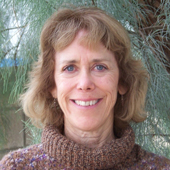
Can a severe, chronic case of “schizophrenia” ever recover? Is psychotherapy an alternative to medications? What role does trauma play in madness?
Hear the inspiring story of how Catherine Penney, RN, was catatonic and locked in a hospital back ward for years, and then emerged to create a new alternative healing community.
http://www.dantescure.com
http://www.desertgathering.com
http://www.iraresoul.com/dvd.html
Podcast: Play in new window | Download (Duration: 47:56 — 43.9MB)
Subscribe: Google Podcasts | RSS
Please follow and like us:


12 comments on “Schizophrenia Psychotherapy: Catherine Penney”
Click on a tab to select how you'd like to leave your comment

















 Creative Commons 2.5 copyright
I just wanted to say thanks again for all you do and to Cathy Penny as well and share a little bit of my story. I’m a recovering addict/alcoholic and have been sober a little over five years. When I was using, I had a few episodes of extreme states and I always just attributed them strictly to the drugs, especially because I didn’t experience any extreme states for about six years, including 4 1/2 years of sobriety.
Then about seven months ago, I went on a ten-day intensive meditation retreat and had a really difficult time afterwards. I went into another extreme state, getting really paranoid and anxious and not sleeping well and eventually heard this voice in my head just repeating the word “kill.” I freaked out with this for several hours and then had the thought that I needed to go become a buddhist monk and immediately felt relief and the voice stopped. But I broke up with my fiance and that started a whole new ball rolling with her freaking out and thinking I was drugged and me scared to tell her what I had experienced. Anyway, I eventually volunteered to go into the psych hospital but was scared to tell the psychiatrist all the details of hearing the voice and whatnot because I figured they’d lock me up and drug me and was discharged after a few days with a label of anxiety and given trazadon and prozac. I took the medication for a couple months but didn’t feel like myself and intuitively knew that I could deal with this without medication.
I’m seeing a therapist and have a few mentors in the insight meditation tradition that I work with and have a daily meditation practice and was really excited to see the Psychosis Dharma Community link. I really feel a strong connection with the spiritual healing modality of extreme states and feel much better after starting to own my experience and share it with others. I still experience some violent, intrusive thoughts and anxiety and paranoia at times but my mindfulness practice has helped so much with them. I was actually thinking of going on a low dose of an anti-depressant about a month ago and low and behold the next day I came upon Madness Radio and haven’t felt the need since! I’ve been pretty well addicted to Madness Radio for the past month, and at times listening to it so much has brought up some painful thoughts and feelings but then there’s hope right along with it. It’s also very cool to know that there’s other people out there that have experienced these extreme states and are dealing with them through support and meditation.
So I’ve had symptoms that would probably be labeled as schizoaffective and/or ocd, I’ve been able to get off medication, and feel like there’s this budding connection with others who have experienced extreme states and found ways outside of the traditional mental health system to deal with them. Thanks again Will and I’ll continue to listen
Just listening to this story makes you realize how important it is not to take the approach of Biopsychiatry if a persons wants to recover. It’s unfortunate that people who are unaware of this will end up in the psychiatric system and be medicated with brain damaging and mind altering drugs.
I’m looking for a counselor for someone who I love, just like the one Cathy described in her story. It is hard to find one since most counselors believe in bad genes theory, calling distress a mental disease, and prescribing medication. I know mindfreedom.org has a directory to find a counselor but it is extremely small, and does not have much listed. Does anyone know any counselors in state of Illinois, in or around Chicago, that do not believe in biopsychiatry and want to help people recover. I would really really appreciate if you help me find one, thank you so much.
Hi there, I have some colleagues in Chicago who might be a good fit, get in touch with me at will(at)willhall.net. Good luck – Will
Thank you
Hello, I am keeping my name anonymous for now, but I have been off my meds for almost eight months now. I am fine physically but am really dying to tell people and feel safe to tell people about me standing up to psychiatry and saying no to poisoning myself with meds. I do not feel safe telling my family or my girlfriend that I am off my meds right now, but I do not like lying to them either. I think it is wonderful how you recovered from catatonia and that I can say I am not severely mentally ill with bipolar. Blessings to you and your family.
My daughter has become really frightening to me. I live in Portland but she was living in Houston Texas for a few years. She came back home to me after living there on the streets for a couple of years. She was a beautiful lovely person with an alternative life style..i.e…stripper…I never agreed with it but I could not stop her…she is now unreachable. She stands talking to walls for hours she believes that there is a group of people that are against her and anyone can become a member if she choses them to be…I am frightened for her life…i feel she will get killed on the streets or she will kill herself… I feel my only option is to get an order from the court to have her committed…to save her life…what do I do??????????loving mother
Submitted by MadnessRadio on Wed, 05/26/2010 – 18:59.
hi there, though it’s always difficult to see things from just one person’s version, the situation you describe is upsetting and I am sorry your daughter is suffering in this way. A commitment order and life in a hospital, under forced medication, is not necessarily a quick fix, and could make things worse: hospitals focus on coercive control and medications and the research and personal experience, as we discuss on Madness Radio a lot, shows that those are not helpful for most people and are risky options. I would start by working on your own belief that she is unreachable, and begin to be more open to the possibility of hope for recovery. It is hard to believe in yourself when people around you don’t. Approaching things from a framework of fear and control may be understandable but also might be contributing to the distress she is in. Usually families need to look within themselves at needed changes, not just look at the problem or sick child as needing to change. I hope you can get supportive therapy for yourself and your family or some other help to focus on changing the things you have control over, and approach your daughter in less of a way that makes her feel like you are against her. If she is unwilling to receive help, the ways you can help yourself and change yourself may have a valuable effect on her. It is not an easy situation and I wish there were more holistic and compassionate resources available for families, and that it didn’t feel like either do nothing or use force. It may be useful also to recognize that family members may not be in the best position to offer help to a person in distress because of the history of family experience and difficulty, and maybe there are other people in her life who can be involved and try to support her in ways she will accept. I encourage you to explore other options and try different approaches rather than rushing to using force and a medical explanation of her problems. – Will
Please check out my blog:
http://schizophreniarecovery-psyche.blog…
Of course it possible to treat a patient without meds with Psychotherapy. The therapy came first and the chemical imbalance theory came later. Start questioning why the reasons for that was? Things like turning women in the 1900s into feminists for one.
Schizophrenia runs strongly in my immediate and extended family. I have both a sister and a nephew diagnosed with schizophrenia. Both were very high functioning creative and popular individuals before the onset of symptoms. As the illness progressed or went untreated, my sister became delusional and loss any awareness of her personal hygiene. She believed by “drinking the blood” of whomever she might perceive to be her “enemy” she would gain insight into that person’s thinking.
My nephew became withdrawn, very paranoid with auditory hallucinations and experiencing a very strong sense of deja vue. He started carrying a weapon to protect himself from a threat only he could perceive. He also became very depressed and suicidal.
Eventually my sister became homeless and lost to us. My nephew, with psychopharmacotherapy was able to get his symptoms under control to the point he was able to return to college and just graduated with his first associate’s degree. When he stops taking his medicines, his symptoms return and he again becomes tortured by voices only he can hear.
I have little doubt that schizophrenia carries a genetic component. I have no doubt that treatments beyond medicines are beneficial. Experience, however, has taught me that for many people, medicines can free some people from a life of torturous hallucinations and allow them to pursue their dreams and goals.
Yes, we have a long way to go in terms of finding effective treatments with minimal side effect profiles. We have a long way to go in terms of vanishing stigma. We have a long way to go in terms of creating social justice and equability. Those who are inappropriately given a diagnosis of schizophrenia to satisfy a discriminatory social purpose have a right to be angry with the mental health system; but for those who truly suffer from this debilitating illness, medications can help them to regain their lives.
I have lost a sister to this illness, I do not wish to also lose my beloved nephew who is a very kind creative curious and compassionate young man. I am grateful there are better medications now available and want pharmaceutical companies to continue to do research in the hope of offering even better treatments. I want other researchers to continue to seek for the cause of this devastating illness in the hopes of finding a prevention.
When certain behavioral patterns seem to run in families, it doesn’t necessarily mean they’re genetically inherited. They may just as well be acquired through observation and imitation. It’s called non-genetic, familiar heredity. This said, even if a genetic “anomaly” existed that clearly differentiates people labelled with “schizophrenia” from “normal” people – and so far we have no proof of such an “anomaly” – it wouldn’t necessarily mean that the behavior which is labelled “schizophrenic” is caused by this “anomaly”. It might as well be the other way round, as recent research results suggest (McGill University, 2009).
Your comment describes your sister’s and nephew’s behavior/experiences almost exclusively in terms that strongly emphasize these behaviors’/experiences’ meaninglessness: “delusional”, “hallucinations”, ” ‘enemy’ ” (in quotation marks), “voices only he can hear”, “a threat only he could perceive”, and ultimately “symptoms”. In other words, a deeper meaning of the so-called “symptoms” in context with the person’s life story is unimaginable. It is unimaginable that your sister for instance could have had a real enemy, someone who threatened her existence, in her life, or that the torturing voices may indeed be flash backs, the real voices of real people, internalized at first, but too painful and destructive to not be split off and externalized in the process. Why is this so unimaginable? Is the illusion about the perfect family idyl, about one’s infallibility as a parent/relative, really so much more important than the psychological well-being of the family member who reacts to the dysfunctionality and destructiveness in the only to him/her remaining way, with “schizophrenia”, after s/he’s been denied any other, potentially more intelligible way of protesting the violence? Well, in a culture that is founded on violence, and with the dysfunctionality that takes place in families, and that drives some people crazy, being no different from that which takes place between nations, or from that which characterizes the relationship between humankind and nature, yes, unfortunately keeping up the il- or actually delusion of the perfect idyl is more important than, well, life (or lives… ).
I’m glad to hear that your nephew managed to return to college and graduate. Anyhow, for the majority of people labelled with “schizophrenia” the drugs unfortunately do not mean returning to college and graduating, but chronification of their crisis and, eventually, disability. That is, they actually prevent these people from pursuing their dreams and goals. BTW, neuroleptics don’t free people from “symptoms”, “hallucinations” or other, but by “freeing” these people from themselves, so to speak. They don’t act specifically on “symptoms”. No chemical substance can tell the difference between a “good” thought or emotion and a “bad” one. So they suppress the “good” ones as well as the “bad” ones. Neuroleptics are major tranquilizers, they suppress life energy. That’s about it, except for the side effects (which by and large also are a result of what happens in the body when life energy is suppressed).
If the ultimate proof for a label of “schizophrenia” to be correct or not is whether a person recovers or not (and it seems to me that you doubt the correctness of the label in Catherine Penney’s case since she recovered fully without drugs), this, taken the disabling side effects of the drugs into account, ought to be strong reason to offer drug-free alternatives as first-line treatment. Not least since the recovery rates of alternatives (Open Dialog in Finland for instance), according to this ultimate “diagnostic criterion”, indicate that about 85% (!) of all people who are labelled with “schizophrenia” have been misdiagnozed, meaning that these 85% actually are drugged and suffer from the drugs’ often serious side effects unnecessarily, while the very same side effects make it unlikely that these people ever fully recover, and that it thus ever is detected that they were misdiagnozed. Unethical, IMHO.
Thank you for sharing. The show today gave me an idea on how to be a better teacher. I am going to begin a “friendship circle” lunch with a few students who seem more withdrawn (sit alone) during the lunch period. I shared the idea with my principal and she loves the idea.