
Madness Radio: Voices And Visions from Outside Mental Health explores 'madness' from beyond conventional perspectives and mainstream treatments, featuring survivors, authors, advocates, professionals, and artists.
Hosted by Will Hall, with guest co-hosts Jacks McNamara and Jessica Gallinger, Madness Radio launched in 2005 on Valley Free Radio and aired more than 200 shows since then. We've been broadcast on KBOO in Oregon, syndicated on other stations through Pacifica, and currenrly podcasting on Spotify, Stitcher, iTunes, Pandora, and Google Play. More info on our About page.
Check out the Madness Radio book! Outside Mental Health: Voices and Visions of Madness gathers edited show interviews and additional content, and is available in print and as a free download.
Madness Radio is an affiliate of Mad In America Radio!
Check out www.madinamerica.com. Theme music courtesy Bonfire Madigan. Thanks to past Madness Radio Producers Jenka Soderberg, Nina Packebush, Leah Harris and Jeremy Lanzman. And thanks to our 190+ Madness Radio Kickstarter donors for supporting the show!
Listen to recent shows below or find us in your favorite podcast app, subscribe to be notified of new episodes on the right, browse by topics, search by keyword, or see a list all 200+ shows by date and title, in the archive. (Shorter versions are also available.)
Madness Radio is creative commons copyright! Please copy, post, and share freely. And get involved: send topic ideas, leave comments, ask FM stations to air us, leave an iTunes review, or make a donation.
Compassionate Therapy | Michael Montgomery | Madness Radio
Can psychotherapy work against the mainstream system? What does it take to be truly compassionate as a professional? And what are the downsides of promising alternatives such as Open Dialogue? Michael Montgomery grew up in Ireland and experienced firsthand the impacts of trauma and violence; a meeting with a visionary friend introduced him to psychiatric oppression. Today he is an existential psychoanalyst in the tradition of R.D. Laing and trained in Open Dialogue, and he joins Madness Radio guest producer Nicki Glasser and host Will Hall to discuss his work. (transcript) (58 min version) www.drmontgomery.com
Podcast: Play in new window | Download (Duration: 1:23:31 — )
Subscribe: RSS
Schizophrenia Shamanism and Family | Dick Russell | Madness Radio
Is “schizophrenia” a broken brain — or shamanic journeying to ancestral dimensions? Is being “out of touch with reality” actually visions of deeper truth and racial healing? Dick Russell – author of 17 books including on the JFK assassination and a biography of Jungian James Hillman – followed doctors’ advice when his son Franklin was diagnosed psychotic. But Franklin, who is of mixed race, only got worse — until Russell and Franklin’s mother Etta Russell-Scott joined West African traditional healer Malidoma Somé on a spiritual quest. Franklin’s creative flourishing helped repair the relationship between father and son, and with Franklin’s support, Russell wrote My Mysterious Son: A Life-Changing Passage between Schizophrenia and Shamanism to bring crucial lessons for all of us. (transcript here) (58 min version)
https://www.skyhorsepublishing.com/9781629144870/my-mysterious-son/
https://dickrussell.substack.com/
https://dickrussell.org/
www.madinamerica.com/2014/12/mysterious-son/
malidoma.com/about/
https://dickrussell.substack.com/
Podcast: Play in new window | Download (Duration: 1:21:59 — )
Subscribe: RSS
Valley Free Radio Anniversary | Will Hall | Madness Radio

Will Hall greets community FM station Valley Free Radio for its 20 years anniversary celebration! Founders Will and Ed Russell sparked the volunteer-run station in Northampton, Massachusetts, dedicated to peace, ecology, and social justice — and home to Madness Radio. Congrats on 20 years of amazing volunteer run community programming and an antidote to our corporate drive media! Video here: https://youtu.be/yz2ZI2LXQMo
https://valleyfreeradio.org/
https://www.northamptonchamber.com/blog/investor-spotlight-valley-free-radio
https://www.instagram.com/reel/DNDnCWBx0Nb/
https://valleyadvocate.com/…/20-hours-to-celebrate-20…/
Low Power To The People | Valley Advocate
Podcast: Play in new window | Download (Duration: 8:12 — )
Subscribe: RSS
- Show topics:
- Activism
- Alternatives
- Community
- History
- Video
Mad Camp 2024 | Jessica Gallinger | Madness Radio

Mad Camp is an annual summer camp for mad people in Northern California – with people joining from all over the world! What’s it all about? Madness Radio producer and co-host Jessica Gallinger attended Mad Camp 2024 and interviewed Mad Campers about their experience, she’s joined by Mad Camp co-founders Dina Tyler and Will Hall to talk about the crazy wild vision they are unfolding to shift the timeline. Original music – Sarah Harper – Soundcloud & Instagram: @SarahHarperRock. https://www.madinamerica.com/2023/02/mad-camp/ www.madcamp.net www.madcampeurope.net
Podcast: Play in new window | Download (Duration: 39:54 — )
Subscribe: RSS
Sex Drugs Harm Reduction | Caty Simon | Madness Radio
How do decriminalizing drug use and sex work advance mad liberation? What lessons can psychiatric survivors learn from the harm reduction movement? Caty Simon’s activist leadership spans the low-income rights, psychiatric survivors, sex worker, and drug users union movements, and she was a key organizer at Freedom Center in Western Massachusetts. Caty is on the leadership team of National Survivors Union (NSU), the US drug users union; is a founding co-organizer of Whose Corner Is It Anyway, a mutual aid group by and for low-income, street, and survival sex workers who use opioids and/or stimulants and/or experience housing insecurity; and leads Narcofeminism Storyshare, a collaborative autobiographical story development and key publics training stigma reduction project at NC Survivors Union, the flagship affiliate group of NSU. Caty is currently a research assistant at the Yale School of Medicine, and in 2023 received the International Drug Policy Reform Conference’s Alfred R. Lindesmith Award. Caty reunites with longtime colleagues and Madness Radio co-hosts Jacks McNamara and Will Hall to talk about psychiatric incarceration and her 20 years experience in the harm reduction movement for drug user, sex worker, and mad people liberation. (Transcript) 58 min version
To contact Caty: caty@urbansurvivorsunion.org
The principles of harm reduction, as defined by the National Harm Reduction Coalition: https://harmreduction.org/
Whose Corner Is It Anyway crowdfund: https://www.gofundme.com/f/
Caty’s research publications on Google Scholar: https://scholar.google.com/
A Contemporary Drug Problems journal article on the Narcofeminism Storyshare project: https://bit.ly/3OMVdRz
NC Survivors Union website: https://www.ncsurvivorsunion.
Caty Simon chapter in Outside Mental Health: Voices and Visions of Madness https://bit.ly/42mRWQL
A series of interviews with late Arise for Social Justice Executive Director Michaelann Bewsee, discussed in the interview, from the Smith College Collection: https://smith.hosted.panopto.
Podcast: Play in new window | Download (Duration: 1:10:51 — )
Subscribe: RSS
Escaped Lunatic | Irit Shimrat | Madness Radio
Legendary psychiatric survivor activist Irit Shimrat escaped psychiatric incarceration to become a leading anti-psychiatry organizer. Co-founder of the Ontario Psychiatric Survivors’ Alliance, Irit edited the Canadian magazine Phoenix Rising: The Voice of the Psychiatrized and wrote Call Me Crazy: Stories from the Mad Movement, bringing together the stories of many leading activists. Irit shares her experiences from the inside of locked wards, and from the outside – organizing to abolish them. (Transcript) 58 min version
Call me Crazy: Stories from the Mad Movement by Irit Shimrat
Spotlight on Institutional Psychiatry Edited by Irit Shimrat
Phoenix Rising: The Voice of the Psychiatrized
Don Weitz Legacy Project
Lunatics Liberation Front web archive
Go Nuts!
Podcast: Play in new window | Download (Duration: 1:05:37 — )
Subscribe: RSS
Visionary Ecology | Steven Morgan | Madness Radio
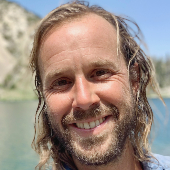
Do grieving goats lick psychedelic lichen? Altered states are part of nature, used by plants and animals for survival(!). How does ecology reveal the evolutionary – and spiritual – purpose of psychosis? Steven Morgan, psychiatric survivor and trainer in Intentional Peer Support, led the Another Way sanctuary and was project director for Soteria Vermont. Today he journeys in the wilderness to find healing and spiritual renewal, and with host Will Hall discusses psychosis as part of evolution, psychedelics in natural ecology, personal visions of Christianity, and communicating with bacteria through expanded consciousness. (Transcript) 58 min version
stevenmorganjr.com
www.madnessradio.net/madness-radio-reinventing-bipolar-steven-morgan/
Music by Steven Morgan
The World We Used to Live In by Vine Deloria Jr.
Intentional Peer Support
Soteria Vermont
Podcast: Play in new window | Download (Duration: 1:18:38 — )
Subscribe: RSS
Grand Rounds UCSF Psychiatry – Will Hall – Madness Radio

Will Hall’s June 2024 Grand Rounds talk at University of California San Francisco Department of Psychiatry and Behavioral Sciences – where he was locked up as a young man! – titled “New Visions of Psychosis: Abolition as Clinical Best Practice.” Revenge is a dish best served cold. Video here: https://youtu.be/adYrzmJ2w50?si=nwAQBM2F6oYmbShe transcript here. 58 min version
Podcast: Play in new window | Download (Duration: 1:24:46 — )
Subscribe: RSS
Philosophy of Madness | Justin Garson | Madness Radio
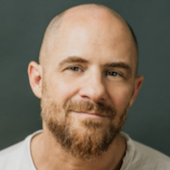
Is madness dysfunction and breakdown – or part of human evolution that helps us survive? Writers going back to Hippocrates saw madness as the organism’s way to cope with its environment, so why has this view almost disappeared today? Justin Garson, professor of philosophy at Hunter College and author of Madness: a Philosophical Exploration, joins co-hosts Will Hall and Jessica Gallinger to discuss madness as a strategy, beyond the biological vs psychological debate. (Transcript) 58 min version
Justin Garson’s website Madness: A Philosophical Exploration
Podcast: Play in new window | Download (Duration: 1:09:21 — )
Subscribe: RSS
- Show topics:
- Books
- History
- Mad Science
- Philosophy
The End of the World | Will Hall | Madness Radio

What can R.D. Laing, madness, and Star Trek teach us about the end of the world – and saving it? Will Hall reads “Can Madness Save the World? Where R.D. Laing—and Star Trek—Meet,” published on Mad In America March 14, 2024. The essay draws on the original series Star Trek episode City on the Edge of Forever and on The Obvious, Laing’s speech at the 1967 Dialectics Of Liberation Congress. (Trust us, this all does makes sense!)
www.madinamerica.com/2024/03/can-madness-save-the-world-where-r-d-laing-and-star-trek-meet/
Podcast: Play in new window | Download (Duration: 21:15 — )
Subscribe: RSS
Crazy or Religious? | Alison Smith | Madness Radio
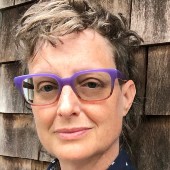
Does hearing God’s voice make you mentally ill? Will psychiatry help you cope with grief and rejection – or make things worse? After a distressing romantic breakup Alison Smith went to her college clinic for help – and was locked up, drugged, and labeled psychotic. Positive and mysterious voices – including visions of Jesus – suddenly turned dark and persecutory, and Alison was driven into psychiatry-induced madness. Co-hosts Will Hall and Jacks McNamara join Alison to discuss religious voices – and psychiatric violence to suppress them. Alison’s writing has appeared in Granta, Real Simple, and PBS’s Stories from the Stage, and her acclaimed memoir Name All the Animals was named a ten best books of the year by People magazine (yes, that People magazine). A coming of age story, Name All the Animals opens on the day Alison’s brother died in a car crash and explores themes of grief, faith and sexuality. Alison lives in Northampton, MA and is working on a new memoir about hearing voices. www.namealltheanimals.com Transcript 58 min version
Podcast: Play in new window | Download (Duration: 1:14:41 — )
Subscribe: RSS
UCSF Grand Rounds | Dina Tyler | Madness Radio
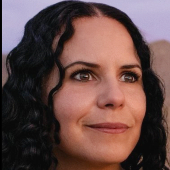
Dina Tyler’s FANTASTIC, heartful, brilliant December 2023 Grand Rounds talk at UCSF Medical School, “Improving Outcomes for Psychosis: Psychiatric Survivor and Critical Psychiatry Perspectives.” Also available as a video. (Transcript) (Slides from talk) (58 min)
www.dinatyler.com
Journal of Humanistic Psychology
Podcast: Play in new window | Download (Duration: 1:12:55 — )
Subscribe: RSS
A Ten Day Voyage | R.D. Laing Politics of Experience Audiobook | Madness Radio
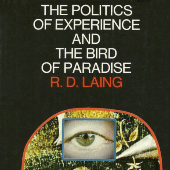
Audiobook mp3 of Chapter 7 “A Ten Day Voyage”, from The Politics of Experience and the Bird of Paradise, by R.D. Laing, read by Will Hall.
Full book .mp3 (cntrl/rtclck save as to download):
https://www.madnessradio.net/audio-extra/RDLaingPoliticsOfExperienceLaingAudiobookFULL.mp3
Full book as chapters on this YouTube playlist:
www.youtube.com/playlist?list=PLMya78GAdrpxtOjEayvMp1lC88ce21kUb
Individual chapters as .mp3 (ctrl/rtclick to save as):
https://www.madnessradio.net/audio-extra/RDLaingPoliticsOfExperienceLaingAudiobookCh1.mp3
https://www.madnessradio.net/audio-extra/RDLaingPoliticsOfExperienceLaingAudiobookCh2.mp3
https://www.madnessradio.net/audio-extra/RDLaingPoliticsOfExperienceLaingAudiobookCh3.mp3
https://www.madnessradio.net/audio-extra/RDLaingPoliticsOfExperienceLaingAudiobookCh4.mp3
https://www.madnessradio.net/audio-extra/RDLaingPoliticsOfExperienceLaingAudiobookCh5.mp3
https://www.madnessradio.net/audio-extra/RDLaingPoliticsOfExperienceLaingAudiobookCh6.mp3
https://www.madnessradio.net/audio-extra/RDLaingPoliticsOfExperienceLaingAudiobookCh7.mp3
https://www.madnessradio.net/audio-extra/RDLaingPoliticsOfExperienceLaingAudiobookCh8.mp3
https://en.wikipedia.org/wiki/R._D. Laing
Podcast: Play in new window | Download (Duration: 33:15 — )
Subscribe: RSS
- Show topics:
- Books
- History
- Philosophy
- Spirituality
Abolition Is Disability Justice | Tina Minkowitz | Madness Radio
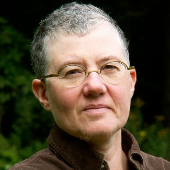
Why are assault, kidnapping, and torture legal – when you have a psychiatric diagnosis? Is psychiatry’s legal double standard unjust in the same way a double standard would be for being female or Black? Does disability justice mean psychiatric abolition – and reparations? Tina Minkowitz, survivor of psychiatric institutionalization and a human rights lawyer, helped draft and negotiate the United Nations Convention on the Rights of Persons with Disabilities. Tina joins Will Hall to discuss why abolition of forced psychiatric treatment means the non-negotiable right to be an equal human being. Tina is founder and president of the Center for the Human Rights of Users and Survivors of Psychiatry, and author of Reimagining Crisis Support: Matrix, Roadmap and Policy. 58 min version transcript here
National Council on Disability from Privileges to Rights report
http://chrusp.org/
10th International Conference on Human Rights and Psychiatric Oppression
Convention on the Rights of Persons with Disabilities
Reimagining Crisis Support: Matrix, Roadmap and Policy (free download)
A Danger to Self and Others: Health and Criminal Consequences of Involuntary Hospitalization
Podcast: Play in new window | Download (Duration: 1:33:00 — )
Subscribe: RSS
Abolish Psy? | Craig Newnes | Madness Radio
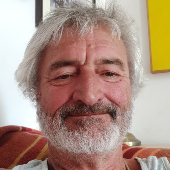
Are psychotherapy’s assumptions completely misguided? What is really at stake in the research and practice of psychology? Is it possible to take a step back and see “psy” for what it is? Craig Newnes is a Jewish dad, grandad, musician, writer, and former director of one of the UK’s largest NHS Psychological Therapies Directorates, and he joins Will Hall to discuss a critical view of the entire psy industry. Past editor of the British Psychological Society clinical psychology division newsletter for 19 years, Craig has doctorates in History and Clinical Psychology and currently edits the Journal of Critical Psychology Counseling and Psychotherapy. He has published over 200 articles and 25 books, including the upcoming Psychomusicology, available from Egalitarian Publishing. (58 min version) (transcript here)
Racism in Psychology
Finniendo – an illustrated saga for children
https://www.
Survivor Poetry
52 Ways to Change Your Life.
Tearagh’t: a novel
Teaching Critical Psychology
A Critical A to Z of Electroshock
Clinical Psychology: A critical examination
Inscription, Diagnosis, Deception and the Mental Health Industry: How Psy governs us all
Podcast: Play in new window | Download (Duration: 1:08:24 — )
Subscribe: RSS
- Show topics:
- Alternatives
- Books
- Professionals
- System Abolition

















 Creative Commons 2.5 copyright
Recent Comments