
Professionals
Meanings of Madness: Gail Hornstein
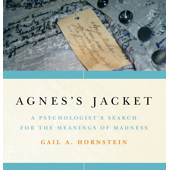
Seamstress Agnes Richter was locked away in a mental asylum in the 1890s, and was so determined to have a voice that she embroidered her personal story onto the jacket she wore on the ward. What is the hidden history of people writing their own narratives of going insane? How important is it to listen to the experiences of “mentally ill” people? Is there meaning in madness?
Gail Hornstein, Mt. Holyoke College professor and author of Agnes’s Jacket: A Psychologist’s Search for the Meanings of Madness, discusses the work of the Hearing Voices Movement in the UK, peer run support communities including Freedom Center in the US, and why professionals should let patients speak for themselves.
Bipolar Medication Myths: Dr Joanna Moncrieff
Is bipolar disorder a disease? Can medications like lithium correct chemical imbalances and stabilize mood? Do psychiatric drugs act completely differently on the brain than recreational drugs?
UK psychiatrist Dr. Joanna Moncrieff, author of The Myth Of The Chemical Cure: A Critique of Psychiatric Drug Treatment, discusses how seeing psychiatric medications as treatments for disease misleads the public about how they actually work, and obscures their potential for abuse as tools of social control.
http://www.critpsynet.freeuk.com
http://www.academyanalyticarts.org/moncrieff.htm
http://www.mentalhealth.freeuk.com/howwork.pdf
Open Dialogue Alternative: Mary Olson
Is a ‘psychotic’ crisis inside one person’s mind — or does it happen between people, in their relationship? Can therapy untangle the web of madness by addressing the family, providers, and entire social network?
Smith College social worker and Fulbright scholar Mary Olson discusses the innovative work of Jaakko Seikkula and colleagues’ Open Dialogue Approach in Finland, which has achieved dramatic success helping people through extreme states labeled ‘psychosis’ and ‘schizophrenia’ — while relying much less on medication and hospitalization.
http://www.dialogicpractice.net
http://beyondmeds.com/2010/01/04/alternative-for-psychosis
http://www.willhall.net/opendialogue
Violent Voices: Erica van den Akker
People who hear voices are no more violent than anyone else — but what about the small number of voice hearers that do actually commit violent crimes? Are medications and locked wards the best way to help those who act on their aggressive “command hallucinations?” What is the relationship between trauma, violence, and voices?
Dutch psychiatric social worker and Hearing Voices Movement member Erica van den Akker discusses her innovative counseling work with violent offenders in the Netherlands.
alpouvar1(at)tomaatnet(dot)nl
Schizophrenia Psychotherapy: Catherine Penney
Can a severe, chronic case of “schizophrenia” ever recover? Is psychotherapy an alternative to medications? What role does trauma play in madness?
Hear the inspiring story of how Catherine Penney, RN, was catatonic and locked in a hospital back ward for years, and then emerged to create a new alternative healing community.
http://www.dantescure.com
http://www.desertgathering.com
http://www.iraresoul.com/dvd.html
Conscience of Psychiatry: Peter Breggin
What do modern psychiatric drug treatments have in common with lobotomy? Is informed consent possible when patients’ judgment is impaired by medication? Should psych drugs be banned?
For more than 50 years Dr. Peter Breggin has been a leading crusader against psychiatric abuse, Big Pharma, and medication dangers. His latest book is The Conscience of Psychiatry: The Reform Work of Peter R. Breggin, MD.
Beyond Belief: Tamasin Knight
How do we respond to bizarre beliefs like CIA brain chips, abduction by aliens, hearing voices, spirit possession, or telepathy? Is respect for a different reality “colluding” with a delusion? Or is there meaning in madness?
Medical doctor Tamasin Knight was hospitalized for delusions, and went on to write the practical guidebook Beyond Belief: Alternative Ways of Working with Delusions, Obsessions and Unusual Experiences, available as a free download at http://www.peter-lehmann-publishing.com/books/beyond-belief.pdf (PDF).
Beyond Meds: Monica Cassani
Blogger and former social worker Gianna Kali discusses her experience going into the mental health system after taking psychedelic drugs, spiritual emergence, decades of treatment with more than 30 different psychiatric medications, and the difficult process of coming off meds, drug withdrawal, and regaining her life.
Gianna is the creator of the Beyond Meds blog about mental health and coming off medications.
Schizophrenia Recovery: Rufus May
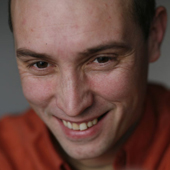
UK clinical psychologist Rufus May descended into madness — convinced he was on a spy mission and that animals were robots, he even walked into a family gathering naked.
How did Rufus find meaning in these experiences, learn to live without medication, and become a successful psychologist and mental health advocate? Rufus was recently featured in the Channel 4 feature film The Doctor Who Hears Voices.
Psychologist and Survivor: Author Ronald Bassman
Internationally known advocate, psychiatric abuse survivor organizer, and clinical psychologist Ronald Bassman discusses and reads from his new book, A Fight To Be: A Psychologist’s Experience From Both Sides of the Locked Door.
Ron was diagnosed “paranoid schizophrenic” and left in back wards as a “chronic case,” but has gone on to become a leader in the recovery movement and an inspiring teacher and therapist.
Hoarding Stuff w/ Randy Frost
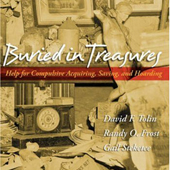
Psychology professor Randy Frost, author of Buried In Treasures, discusses his work on hoarding, people who collect so much stuff excessively that it disrupts their lives or creates a health or fire hazard, including how to help people without risking adding to the problem through intrusive or drastic intervention.
- Show topics:
- Alternatives
- Books
- Hoarding
- Professionals
Cognitive Therapy: Ron Unger
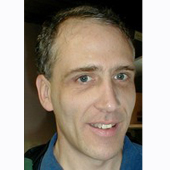
Oregon Mental health counselor Ron Unger discusses his experiences with altered states of consciousness, and how cognitive behavioral therapy can be a useful alternative to medication and mainstream psychiatric treatment. Ron is a longtime organizer with the human rights organization Mindfreedom International, and his website is http://www.recoveryfromschizophrenia.org/blog/
Wounded States of Consciousness: Bogna Szymkiewicz
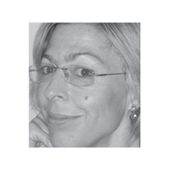
Warsaw Poland psychologist Bogna Szymkiewicz discusses “wounded states of consciousness,” what the mind and body do when trauma is activated, as well as how trauma affects our relationships and what we can do to recover.
Genetic Predispositions? Jay Joseph

Clinical psychologist Jay Joseph details medical science’s 30-year failed quest to find any link between genetics and diagnoses of mental disorders, and debunks widely held beliefs in the psychiatric profession, including the idea of “genetic predispositions” for mental illness.
Jay is the author of The Missing Gene: Psychiatry, Heredity, and the Fruitless Search for Genes and The Gene Illusion: Genetic Research in Psychiatry and Psychology Under the Microscope.
Psych Diagnosis Bias: Paula Caplan
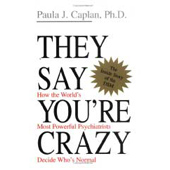
Harvard University faculty Paula Caplan, author of They Say You’re Crazy: How The World’s Most Powerful Psychiatrists Decide Who’s Normal and editor of Bias In Psychiatric Diagnosis.
Paula was on one of the writing committees for the DSM and offers an insightful perspective on the politics behind psychiatric pseudo-science. She discusses mental disorder labeling, including bipolar and post-trauma stress disorder, from a feminist perspective.

















 Creative Commons 2.5 copyright
Recent Comments