
History
Psychotherapy for Schizophrenia | Bert Karon

In schizophrenia really an “incurable illness” — or a state of chronic terror? Are there ways for psychotherapy to reach people in different realities? And can talk therapy offer a humane and empowering approach?
Bert Karon, psychoanalyst since 1955, co-author of the classic textbook Psychotherapy of Schizophrenia, and Professor of Clinical Psychology at Michigan State University, outlines psychoanalysis and discusses how his talking cure helps people diagnosed psychotic and schizophrenic.
http://psychrights.org/Research/Digest/Effective/BKaronTragedyofnoPsychotherapy4Schizophrenia.pdf
Indian Country Psychology: David Walker

How is the legacy of colonialism impacting American Indian mental health today? Does the Indian Health Service meet the needs of the people on tribal land? Can Native peoples revitalize cultural traditions and reverse centuries of racism?
David Walker, mixed-heritage Cherokee, psychologist working at the Yakama Nation, and author of the award-winning novel Tessa’s Dance, discusses healing the deep wounds of intergenerational trauma in Indian Country.
Understanding Borderline Trauma: Rita Marshall
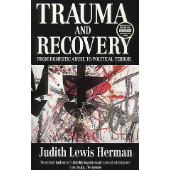
Why are so many trauma survivors, especially women, diagnosed “borderline?” Is the label useful — or sexist and degrading? How can people who live through intergenerational violence be understood and supported — instead of discounted and silenced?
Rita Marshall, human rights activist and former psychiatric inmate from a family of Holocaust survivors, examines the social and political context for the controversial “Borderline Personality Disorder” diagnosis.
Note – this is an interview with a psych survivor activist who asked at the time that her name be disguised. They recently passed away from an illness.
Singing in the Dark | Susan McKeown on Madness Radio

Is poetry the way to truly understand madness? Do rituals and music — such as Ireland’s tradition of keening — have the power to heal emotional suffering?
Susan McKeown, Grammy award-winning singer/songwriter and folklorist, supported her partner through an extreme state. She began a journey to uncover intergenerational trauma in her family and in the history of her native Ireland, and was inspired to take poems about madness — by Anne Sexton, Theodore Roethke, James Clarence Mangan, Gwendolyn Brooks, and others — and set them to music in her album “Singing in the Dark.”
http://www.susanmckeown.com
http://irishphiladelphia.com/singinginthedark
Madness and Renewal: Michael Cornwall

What if people struggling with madness could explore their emotions in a supportive sanctuary? Do frightening ‘psychotic’ experiences have the power to transform and heal? Is breakdown also breakthrough?
Michael Cornwall became a therapist after surviving his own crisis — without medication or psychiatric treatment. For more than 30 years he has worked in the tradition of Carl Jung and R.D. Laing to support people to go through psychotic states in medication-free community settings, including John Weir Perry’s Diabasis House in the 1970s.
http://www.madinamerica.com/author/mcornwall/
http://altmentalities.files.wordpress.com/2012/02/michael-cornwall-diss.pdf (PDF)
Dignity of Elders: Carole Hayes-Collier

Why are nearly a third of all elders in nursing homes given anti-psychotic drugs, despite life threatening side effects? Are medications being used as chemical restraints? Can nursing homes be places of dignity — or should they be abolished?
Carole Hayes-Collier was diagnosed schizophrenic at 19 and left to a lifetime of hospitalization. When she recovered, the abuses she witnessed inspired her to join the Gray Panthers and dedicate her life to elder rights and mental health.
http://graypanthers.org
http://online.wsj.com/article/SB119672919018312521.html
http://www.canhr.org/stop-drugging
Meanings of Madness: Gail Hornstein

Seamstress Agnes Richter was locked away in a mental asylum in the 1890s, and was so determined to have a voice that she embroidered her personal story onto the jacket she wore on the ward. What is the hidden history of people writing their own narratives of going insane? How important is it to listen to the experiences of “mentally ill” people? Is there meaning in madness?
Gail Hornstein, Mt. Holyoke College professor and author of Agnes’s Jacket: A Psychologist’s Search for the Meanings of Madness, discusses the work of the Hearing Voices Movement in the UK, peer run support communities including Freedom Center in the US, and why professionals should let patients speak for themselves.
Icarus Project: Sascha DuBrul
How did the New York underground of punk rock music, squatting, and homeless protest give rise to a thriving and innovative peer-run mental health community? Are there creative gifts to be found in the depths of madness? Does the future of Mad Pride lie in the joining of activism with spirituality?
Icarus Project co-founder Sascha Altman DuBrul discusses his escape into apocalyptic visions and psychiatric hospitals, and how he was inspired to challenge the identity of bipolar disorder.
scatter(at)theicarusproject(dot)net
http://www.theicarusproject.net
Bipolar Medication Myths: Dr Joanna Moncrieff

Is bipolar disorder a disease? Can medications like lithium correct chemical imbalances and stabilize mood? Do psychiatric drugs act completely differently on the brain than recreational drugs?
UK psychiatrist Dr. Joanna Moncrieff, author of The Myth Of The Chemical Cure: A Critique of Psychiatric Drug Treatment, discusses how seeing psychiatric medications as treatments for disease misleads the public about how they actually work, and obscures their potential for abuse as tools of social control.
http://www.critpsynet.freeuk.com
http://www.academyanalyticarts.org/moncrieff.htm
http://www.mentalhealth.freeuk.com/howwork.pdf
Schizophrenia and Black Politics: Jonathan Metzl

How did the definition of schizophrenia change during the civil rights and Black Power era of the 1960s? Why did a disease primarily affecting withdrawn white housewives suddenly become focused on angry and “paranoid” African American men instead?
Psychiatrist and historian Jonathan Metzl, author of The Protest Psychosis: How Schizophrenia Became a Black Disease, discusses racism and social control in psychiatric diagnosis, and how Black protest was turned into a mental disorder and psychosis was a political tool.
jmetzl(at)umich(dot)edu
http://bit.ly/byOeIw
Schizophrenia Psychotherapy: Catherine Penney

Can a severe, chronic case of “schizophrenia” ever recover? Is psychotherapy an alternative to medications? What role does trauma play in madness?
Hear the inspiring story of how Catherine Penney, RN, was catatonic and locked in a hospital back ward for years, and then emerged to create a new alternative healing community.
http://www.dantescure.com
http://www.desertgathering.com
http://www.iraresoul.com/dvd.html
Conscience of Psychiatry: Peter Breggin

What do modern psychiatric drug treatments have in common with lobotomy? Is informed consent possible when patients’ judgment is impaired by medication? Should psych drugs be banned?
For more than 50 years Dr. Peter Breggin has been a leading crusader against psychiatric abuse, Big Pharma, and medication dangers. His latest book is The Conscience of Psychiatry: The Reform Work of Peter R. Breggin, MD.
Paxil On Trial: Alison Bass

When GlaxoSmithKline was caught lying about the risks of its blockbuster anti-depressant Paxil, it set off ongoing investigations. How did New York state take on one of the world’s most powerful companies? Was NY Governor Eliot Spitzer driven out by his corporate enemies?
Pulitzer-nominated Boston Globe journalist Alison Bass, author of Side Effects: A Prosecutor, A Whistleblower, And A Bestselling Antidepressant On Trial, discusses legal battles to clean up drug company corruption, including pay-offs to the National Alliance for the Mentally Ill.
Mad Science Mad Pride: Bradley Lewis

What is the mad movement’s best response to science? How is mad pride different from gay pride? Do we want to become equal with “normal” people — or challenge the idea of normal itself? What about suffering and the risk of romanticizing madness?
Icarus Project organizer, psychiatrist, and theorist Bradley Lewis, author of Moving Beyond Prozac, DSM, and the New Psychiatry: Birth of Postpsychiatry, discusses the identity politics of madness.
http://www.theicarusproject.net
http://www.nyu.edu/gallatin/about/bios/bradley_lewis.html
Our Daily Meds: Melody Petersen
More than 100,000 people die in the US each year from prescription drugs — used as directed by their doctor. How did aggressive marketing make our health care system a cause of widespread sickness? Why haven’t government regulation or medical research been able to protect the public?
New York Times health reporter Melody Petersen discusses her new book, Our Daily Meds: How the Pharmaceutical Companies Transformed Themselves into Slick Marketing Machines and Hooked the Nation on Prescription Drugs.

















 Creative Commons 2.5 copyright
Recent Comments