Sex workers Caty Simon and Maryse discuss social standards of normal and acceptable sexuality and how it affects mental wellbeing, from the point of view of sex workers rights.
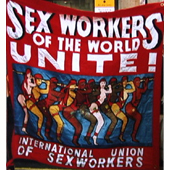

Sex workers Caty Simon and Maryse discuss social standards of normal and acceptable sexuality and how it affects mental wellbeing, from the point of view of sex workers rights.
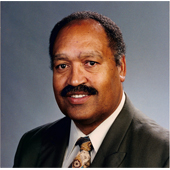
Inside Soteria House with Voyce Hendrix, original clinical director who worked closely with Loren Mosher. Soteria House was a non-medication, non-diagnostic label and voluntary residence treating severe psychotic breakdown. Recovery rates were much higher in this humane and egalitarian atmosphere — but the project was shut down because it challenged the pharmaceutical company pro-medication interests.
Voyce discusses how Soteria was different than mainstream facilities and describes the healing results it had.
More info on Soteria House at http://www.moshersoteria.com
 OK so I’m in the land of John Waters, who created the “Come To Baltimore and Be Shocked” bumpersticker as a joke — and the City Council made it the official city motto. Waters is the only public figure I would elect as president with complete confidence, and his Female Trouble taught me everything I needed to know about politics that I didn’t learn listening to Pink Floyd The Wall with headphones over and over again. (Maybe I’m exagerrating — but not by much.) So I feel at home here.
Except that when the subversives find their way into the inner circle, something is up, and when the Outsider Artists (itself a troubling label) get their own museum, you can bet there is a catch somewhere. Like Water’s camp motto that becomes something different when it goes official, Visionary Art strayed from itself when it arrived in a museum.
That’s right, the US has an official national mental patient art museum in Baltimore, sort of: The American Visionary Art Museum — a collection of Outsider or un-trained folk art. Outsider Art got on the art world radar when Jean Dubuffet championed what he called Art Brut after getting turned on to Prinzhorn’s collection and other insane asylum inmate artworks, seeing them as a pure inspired authentic challenge to the assimilated, coopted works of artists following the leads and influences of the art world and economy. And here is where the trouble begins.

No doubt this is a beautiful collection of amazing obsessive, inspired, haunting, whimsical, energetically charged and emotionally compelling art that, at moments, blew my mind. The first moment was dazzling: stepping into the museum to see a giant Icarus statue (!) with mirrored wings, on a nonstop slow twirling descent in the gallery’s main staircase, suspended from a motorized winch down to a jeweled ocean and back again, silently bobbing up and down over and over, while we ambled around the galleries. Nice welcome.
 It was, overall, way cool. This art is getting seen; I get to see it; this is good. My thanks to the people who made this place possible, because we’re all enriched by seeing these works. Scrap heap welders, addicts, prophets, mad scientists, claymation maniacs, psych inmates painting on paper plates, the barely/non/super-literate, religious zealots, hermits, obsessives, whirligig cobblers, the brain injured, backyard emperors — all with their obsessions on display, professional art gallery style (though the gallery lighting was crap and much of this should properly be seen in sunlight). This place is fun! Presiding over them all is the ubiquitous Rev. Howard Finster, his enamel paint on woodscrap childlike angel greeting you right before you discover Icarus. (Finster’s work was immortalized as a Talking Heads album cover and he is sort of the patron saint of American outsider artists, deservedly so if you saw, as I was blessed to see, his overwhelming one-man museum show or visited his alternate reality Paradise Garden in Georgia or even just watched his trickster TV appearance with Johnny Carson).
Again and again, as you check out the matchstick furniture and the distorted perspective watercolor paintings and the welded silverware and the rest of the chaotic whatever-is-near-at-hand-is-art relentlessness of it all, you get the feeling of, Hey, I can make this! Which you probably can’t, or maybe you can and will someday, but that is a really good, and rare, message for people to get from an art museum — Maybe I can be an artist too. They even have a whole studio for the public where they offer artmaking workshops — free (though I think it is a mistake that belies their priorities that the museum website has almost zero images of the art). So overall, way cool.
 But there is still this weird feeling that Something Is Up with this whole Outsider Artist thing. The museum uses the term ‘visionary artist,’ which is presumably an update of Outsider Artist term to clarify what it is, and is not. Calling it folk art would be close – except that these works don’t come out of any tradition (maybe Independent Folk Art would be more accurate.) The artists are self-taught and free of art school / art market guidance (which was what drew Dubuffet to them and is stil the defining characteristic). A lot of them were told by God to make robots or paint doors or construct dioramas or whatever — hence Visionary Artist. Many of them offer no explanation of why they make what they make (didactic panels by the works give biographies, usually establishing some True Outsider cred — such as the painter who lost almost all their work because of the psych ward where they lived had policies to destroy everything).
 Even grooving on all the funny, freaky, spooky, gorgeous and mysterious stuff in the museum, I was still acutely aware of the way in which this is less a collection of art on its merits and more about what is on the minds of art collectors and critics. Like the Noble Savage of new age religions, Outsider Art is defined and then celebrated for supposedly being the idealized opposite of what the Insider Art world wants to escape — itself. Being at this museum is ultimately just what I find disturbing about all art museums — an expression of the (elite-club dominated) art marketplace talking with itself about itself and holding it all up as some kind of natural, apolitical definition of Art. And if we disagree or feel strange, well, obviously we just don’t understand.
 Someday someone will write a real history of these artists and discover that many actually did have some art training, did actually care about what other people thought about their work, were trying to convey something intentional (not just pure spontaneity), did have doubts and self-criticism amidst their inspiration, did have aesthetic values, did have artistic influences and models, were ambitious — that they were, actually, a lot like the Insider Artists that they are supposedly so different from. And being an Insider Artist will also someday be recognized as sharing a lot more of the madness, inspiration, blind spontaneity and raw playful childlike innocence supposedly the property of the Outsiders. The distinction between Insider and Outsider artists, or Trained and Untrained, or whatever opposition you want to make, will look a lot less self-evident. The distinction between Insider and Outsider Artists themselves will be seen for what it is — an expression of decisions made by art critics, museums, and collectors to promote one artist over another, to value one and ignore another, to deem one as having ‘authenticity’ and the other not. (I am thinking about an artist friend who has been multiply hospitalized for intense mad breakdowns, but couldn’t get an Outsider Art program to help her with her work because she has been to art school and has had her work shown in galleries already.) Once we get honest about this and include it front and center and not hide it behind trustee meetings and curator planning sessions, we can get on with the real issue, which is discovering and celebrating art on its merits and spirit, not on some kind of Outsider Art credentials of authenticity. After all, isn’t it an insult to tell a novelist they wrote a great Black novel or Women’s novel — trapping them in a subcategory that keeps them down just as it claims to lift them up?
It is the mystery of the commodity, of class, of sovereignty and status that gives one object what Walter Benjamin called an “aura” and doesn’t give it to another. Many of us might pass any of these artworks on a sidewalk and not see their beauty and amazingness. Put it into a museum context, surrounded with the ritual and furnishings of Art, and it becomes something different. For Outsider or Visionary Arts, part of that aura is the biography behind the artists’ otherness, bestowed with added value through meaning. Once we learn the artist is a ‘schizophrenic’ we see the art differently. Once it is in a museum and given Real Art status, we see it differently. Why, exactly? Who decides? And doesn’t it become patronizing to have one class of art judged on its merits and another class judged on the exotic biography of the artist? (Hey, maybe I should market myself as a schizophrenic writer! Oh wait…)
 Because that is the problem here: emphasizing the artist’s behind-the-work weirdness, even in a positive romanticixing way, can easily become just another form of stigma. The typical photo of an Outsider Artist conveys some bent, low-class, disturbed, challenged or deranged stereotype, a twisted face in front of a trailer park or matted hair and smeared shirts with an I’m Different posture and expression. The museum website just wouldn’t fly as an Outsider Artist website if the artist photo looked, well, normal (same for images of the ‘mentally ill’ in pop culture — no relation to reality, just stereotypes). It has to look Exotic, because, well, we know Those People are different, right? Just like you don’t see sunglasses and walkmans in the photos of the True Indigenous People, you don’t see what these artists really look like unless they fit the Authentic criteria — criteria which really exist nowhere but in the minds and expectations of the critics/curators/dealers and the consumer museumgoers they train.
Ultimately judging that someone is a True Outsider Artist means a whole set of stereotypes come out of the mind of the art critic or curator who is doing the judging. And since those minds are full of all kinds of prejudice and misinformation (mental illness being a disease is a big one, or that people who have psychotic experiences are totally different than you or I and only found in hospitals or homeless shelters rather than, well, on the editorial boards of art journals and sitting on curatorial committees), this Other-ing of these artists reinforces stigma. It turns our identities as people who go through madness, visions, or whatever into rigid identities defined by other people, by people with the power to influence us, rather than letting our identies be more messy and ambiguous, constantly surprising and confounding expectations. Who an artist is, or who a mad person is or who a woman is or who a black person is, defies expectations and is ultimately individual and unique, not reflecting some stereotype. Yes there are commonalities and oppressions shared by groups, yes there is institutonal and historical treatment of groups, but when you meet an individual you’d better not let your understanding of those commonalities get in the way of the individual before you — or you are being oppressive.
What I would like to see is openness and transparency about these discussions and debates and all the art journal, critic, and dealer politics they imply about deciding who’s a Visionary Artist: Who Gets In and Who Gets Ignored (and there are tons and tons of brilliant artists every bit as amazing as the ones in this museum who never make it into official art world attention). Because isn’t being a Visionary Artist about marketing and what sells, and what sells is weird exotic stereotyped Others, and shouldn’t we be questioning this?

In general the museum has good politics — one of the shows was all about animals, including good info on animal rights and why eating meat is a bad idea. But the artist descriptions keep telling us this or that artist has “Bipolar Disease” or “Schizophrenia Disease,” reinforcing the whole These Are People Totally Unlike Us Normal People. Yes it’s great to see the positive side of the downtrodden and the suffering and to acknowledge that creativity sometimes goes along with madness, but you are still creating a freak show with the distinctions between normal and diseased people. It’s like the Special Olympics for mad and illiterate artists – yes let’s give people left out access to the center stage, but let’s not let it be an exercise in pity, paternalism, and sentimentality for the freaks. Poverty,madness, isolation — the museum’s fascination in this risks turning the whole experience into a carnival attraction — a polite, upper class, academic, educated circus.
 And what more proof could you need than this: they actually have chimpanzee art up alongside the rest of the ‘outsider art,’ on the same walls as mental patient painters and backyard junk-pile illiterate sculptors . That’s right, paintings made by chimps in captivity. Beautiful abstract finger paintings that are a marvel to look at, for sure. And by all means, it’s a great idea, and let’s get animals, bacteria, plants, insects, and everything else making and displaying art. But think about that: Isn’t that the ultmate Outside Artist: in their own world, unreachable, can’t speak, totally not like us — an object to be presented and bought and sold, a pet in captivity, not a subject to be met and discussed with and encountered as an equal, someone who fundamentally shares our humanity and is not Other? Isn’t that the ultimate message here: Outside Artists aren’t really — human? Aren’t painting chimps and obsessive hermit mental patients the same from this view: innocent, pure, exotic, unlike Us — everything those Insider Artists aren’t and secretly romantically long to be? And aren’t chimpanzees and mental patients and illiterate backyard junk pile sculptors as a result free to be used like mute commodities, any way the Insiders please?
Yes there is a true and inspired artistic impulse. Yes it is beyond art school, art markets, or folk art traditions, yes anyone can do it and yes madness and religious inspiration can drive it and yes it is great to get unschooled inspired artists up on display for the world to see and so they can even earn some money from their art. But somehow all that becomes something different when the Insider Artists and curators and museum directors try to fit it into a traditional museum. The museum, with its power, marketing, money, control, and elitism, is the very art world Outsder Art was trying to leave behind.
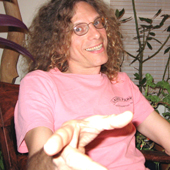
Visionary writer, musician, and sculptor Eddie Bartok-Baratta performs his powerful poetry, plays flute, and discusses his amazing life, trauma and violence, and his creativity.

A harrowing film of six families devastated by the dangerous violence-causing effects of anti-depressant drugs.
Urban Shamanism with Julie Spooner, licensed psychologist from Brooklyn New York. Julie discusses a spiritual healing approach to madness and psychosis, including journeying through visionary states into alternate dimensions and interacting with illness and imbalance in their energetic and mystical forms.
Are people labeled ‘psychotic’ journeying to other dimensions like shamans do, but without realizing it? How can people learn to control these experiences as gifts rather than curses?
Julie can be reached at (718) 773-3338.
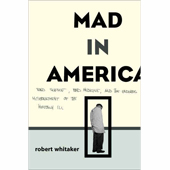
Violence and Madness with Robert Whitaker, Pulitzer-nominated author of “Mad In America,” discussing the role of psychiatric drugs in causing violence, the history of coercive psychiatric treatments, and responses to the recent murder of prominent psychiatrist Wayne Fenton by his patient.
Commonsense Rebellion with Bruce Levine, dissident psychologist and author of Commonsense Rebellion: Taking Back Your Life from Drugs, Shrinks, Corporations, and a World Gone Crazy, discusses the social forces that drive people to depression, anxiety, and mental breakdown, and how community and caring are the way to a healthier self and world.
Self-injury and cutting with Ruta Mazelis, psychiatric abuse survivor and editor for 17+ years of the acclaimed newsletter “The Cutting Edge”. Cutting, burning, head banging and other self-harm are discussed from the point of view of people doing them — as coping mechanisms that need compassion and understanding, not the force and judgment of mainstream psychiatry.
Check out http://www.healingselfinjury.org
Transsexual writer and activist Kate Bornstein on her book Hello Cruel World: 101 Alternatives to Suicide for Teens, Freaks and Other Outlaws. Kate overturns the orthodox either-or labels of male / female and straight/gay/bi with her postmodern sexuality of self-definition and fluid identity.
Kate is the author of the highly successful books My Gender Workbook and Gender Outlaw: On Men, Women and The Rest of Us, and her new book takes a transgressive and honest approach to what it takes to stay alive in a crazy world.
Delphine Brody is a psych survivor and advocate with the California Network of Mental Health Clients who has years of experience working for substantial policy change on the local, state, and national level.
Delphine also addresses efforts to stop forced outpatient commitment laws in California in the wake of the recent tragic murder of psychiatrist Dr. Wayne Fenton.

Oryx Cohen and Will Hall of the Freedom Center discuss how to reduce and go off psychiatric drugs safely. Oryx is diagnosed with bipolar disorder and Will with schizophrenia, and both are medication-free.
They talk about their own experiences as well as general principles and things to keep in mind for anyone working to reduce or go off psychiatric drugs, lessons learned from 5 years of working with the Freedom Center support group and helping people reduce and go off drugs successfully.
Reason, pseudonym of Valley Free Radio’s Antidote Radio host, discusses multiple chemical sensitivity, environmental illness, toxins in our surroundings, food, and bodies, and how this affects our mental health and overall wellbeing. Your diagnosis might be from chemical exposure! Learn about how to address this important issue.
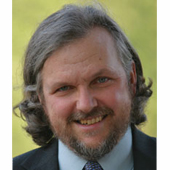
David Oaks, Director of Mindfreedom International, the leading psychiatric survivor human rights coalition, talks about his 30 years of experience as a movement activist, Mindfreedom’s work, and strategies and visions for challenging corporate psychiatric control of mental health care.
David also hosts the weekly Mindfreedom News Hour radio show at http://www.theprn.org
Barney Plisko, longtime Freedom Center member who has struggled for years with extreme states of consciousness, discusses living with a bipolar diagnosis, dealing with the mental health system, efforts at recovery, and the different ways his condition has disrupted and undermined his life — as well as offered unexpected opportunities and gifts.















 disabilityjusticepalestine.jpg

 Creative Commons 2.5 copyright. You are free to share, copy, broadcast, and distribute unaltered shows noncommercially. Login
Recent Comments