
International
Understanding Borderline Trauma: Rita Marshall
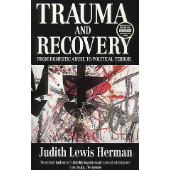
Why are so many trauma survivors, especially women, diagnosed “borderline?” Is the label useful — or sexist and degrading? How can people who live through intergenerational violence be understood and supported — instead of discounted and silenced?
Rita Marshall, human rights activist and former psychiatric inmate from a family of Holocaust survivors, examines the social and political context for the controversial “Borderline Personality Disorder” diagnosis.
Note – this is an interview with a psych survivor activist who asked at the time that her name be disguised. They recently passed away from an illness.
Singing in the Dark | Susan McKeown on Madness Radio
Is poetry the way to truly understand madness? Do rituals and music — such as Ireland’s tradition of keening — have the power to heal emotional suffering?
Susan McKeown, Grammy award-winning singer/songwriter and folklorist, supported her partner through an extreme state. She began a journey to uncover intergenerational trauma in her family and in the history of her native Ireland, and was inspired to take poems about madness — by Anne Sexton, Theodore Roethke, James Clarence Mangan, Gwendolyn Brooks, and others — and set them to music in her album “Singing in the Dark.”
http://www.susanmckeown.com
http://irishphiladelphia.com/singinginthedark
Meaning From Voices: Eleanor Longden
Hearing voices is strongly connected with traumatic experiences, but are voices a brain malfunction or a creative strategy for protection?
UK psychologist Eleanor Longden survived a diagnosis of paranoid schizophrenia and went on to be a leading researcher around voice hearing, trauma, and dissociation. She is a pioneer in the movement to understand voices as a normal human experience — and truly help people by healing trauma.
http://ind.pn/3ltxoe
http://bit.ly/NjDA77
http://bit.ly/z01Fhn
Chemical Crucifixion: Grainne Humphrys
Could a young man’s overwhelming visions of Christ and apocalypse be a creative response to life trauma, rather than signs of paranoid schizophrenia? Does madness unfold differently depending on whether it is supported – or feared?
Irish activist and punk musician Grainne Humphrys, herself a survivor of an extreme state, discusses the campaign for the release of former partner John Hunt. John has been incarcerated and drugged against his will since 2005, sparking international outcry.
http://freejohn-loverevolutionary.blogspot.com
http://www.mindfreedomireland.com
Talking About Suicidal Feelings: David Webb
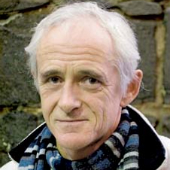
How common are suicidal feelings? Is a psychiatric illness behind suicidal despair — or a meaningful and even spiritual life crisis? Does forced hospitalization really provide help?
Suicide attempt survivor David Webb, author of Thinking About Suicide: Contemplating and Comprehending the Urge to Die, discusses how speaking openly about suicidal feelings, rather than reacting with panic and fear, is the best form of suicide prevention.
http://www.jungcircle.com/DWebb.html
http://thinkingaboutsuicide.org
Exporting Mental Disorders: Ethan Watters
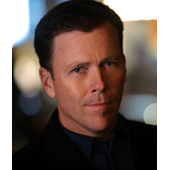
How did pharmaceutical giant Glaxo Smith Kline create “depression” in Japan — and a billion dollar market for its anti-depressant drug Paxil? Why do people diagnosed with schizophrenia recover more in Tanzania than they do in the US? Can western-style psychotherapy help tsunami survivors in Sri Lanka?
Ethan Watters, author of Crazy Like Us: The Globalization of the American Psyche, discusses how mental disorders are cultural products, defined in the US and then exported around the world.
Therapy for Psychosis: Daniel Mackler
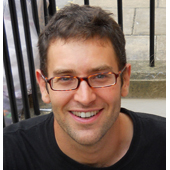
Can therapy reach people in extreme states of “psychosis” — without using medications? Do we need to give a diagnosis to help someone? Why are counselors afraid to listen to their “mad” clients?
New York psychotherapist and filmmaker Daniel Mackler discusses how be defied social work training in his work with people labeled with schizophrenia and bipolar, and what he learned from recent visits to successful treatment alternatives in Northern Europe. Daniel is the filmmaker of Take These Broken Wings and co-author with Matthew Morrissey of A Way Out of Madness.
Meanings of Madness: Gail Hornstein
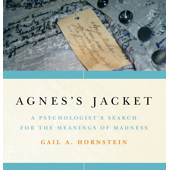
Seamstress Agnes Richter was locked away in a mental asylum in the 1890s, and was so determined to have a voice that she embroidered her personal story onto the jacket she wore on the ward. What is the hidden history of people writing their own narratives of going insane? How important is it to listen to the experiences of “mentally ill” people? Is there meaning in madness?
Gail Hornstein, Mt. Holyoke College professor and author of Agnes’s Jacket: A Psychologist’s Search for the Meanings of Madness, discusses the work of the Hearing Voices Movement in the UK, peer run support communities including Freedom Center in the US, and why professionals should let patients speak for themselves.
Bipolar Medication Myths: Dr Joanna Moncrieff
Is bipolar disorder a disease? Can medications like lithium correct chemical imbalances and stabilize mood? Do psychiatric drugs act completely differently on the brain than recreational drugs?
UK psychiatrist Dr. Joanna Moncrieff, author of The Myth Of The Chemical Cure: A Critique of Psychiatric Drug Treatment, discusses how seeing psychiatric medications as treatments for disease misleads the public about how they actually work, and obscures their potential for abuse as tools of social control.
http://www.critpsynet.freeuk.com
http://www.academyanalyticarts.org/moncrieff.htm
http://www.mentalhealth.freeuk.com/howwork.pdf
Open Dialogue Alternative: Mary Olson
Is a ‘psychotic’ crisis inside one person’s mind — or does it happen between people, in their relationship? Can therapy untangle the web of madness by addressing the family, providers, and entire social network?
Smith College social worker and Fulbright scholar Mary Olson discusses the innovative work of Jaakko Seikkula and colleagues’ Open Dialogue Approach in Finland, which has achieved dramatic success helping people through extreme states labeled ‘psychosis’ and ‘schizophrenia’ — while relying much less on medication and hospitalization.
http://www.dialogicpractice.net
http://beyondmeds.com/2010/01/04/alternative-for-psychosis
http://www.willhall.net/opendialogue
Ireland Voices: Brian Hartnett
Can recreational drugs be an opening to genuine spiritual awakening? Brian Hartnett’s passion for rave dance music — as well as alcohol and ecstasy — cost him his career.
Doctors labeled his paranoia, telepathy, and voices symptoms of schizophrenia. But Brian went on to become one of the founders of Hearing Voices Ireland, and discover a new, heightened spirituality.
Hearing Voices Movement: Jacqui Dillon
What is it like to hear voices? How do people learn to live with their voices, and are voices sometimes positive and helpful? What is the connection between voices and trauma?
Jacqui Dillon, voice hearer and director of the UK Hearing Voices Network, discusses how the movement of people who hear voices is creating self-help alternatives to traditional and often abusive mental health care.
Evolving Minds: Mel Gunasena

UK video activist and writer Mel Gunasena on her mystical experiences and forced psychiatric hospitalization. Mel is the director of Evolving Minds, a documentary film about spiritual experiences and what gets labeled “psychosis” by the mental health system. She also discusses the art therapy project in Sri Lanka she helped found to assist traumatized tsunami-affected children.
See a trailer for the film at http://www.undercurrents.org/minds and check out the Sri Lanka project at http://www.art-2-art.org
Wounded States of Consciousness: Bogna Szymkiewicz

Warsaw Poland psychologist Bogna Szymkiewicz discusses “wounded states of consciousness,” what the mind and body do when trauma is activated, as well as how trauma affects our relationships and what we can do to recover.
Black Mental Health UK: Philip Morgan
Blacks in the UK are much more likely than white people to be locked up, put on drugs, and mistreated in the mental health system.
Social scientist Philip Morgan of London’s Tower Hamlets African and Caribbean Mental Health Organization (THACMHO) discusses the legacy of slavery, survivor-run advocacy for system change, and an innovative project reclaiming Black identity through historical research.

















 Creative Commons 2.5 copyright
Recent Comments