
Activism
Legacy of R.D. Laing | Michael Guy Thompson | Madness Radio
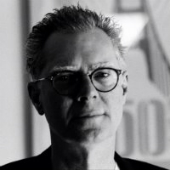
Is psychosis a journey and a breakthrough to somewhere more authentic? Should unhappy people be made to adjust to a mad society? Scottish psychiatrist R.D. Laing was a fierce critic of the mental health system, and saw madness as a rational adaptation to irrational family and social constraints. Laing’s compelling prose, acute intellect, and spiritual insight made a huge cultural impact worldwide, shaping the psychiatric survivor movement and calling to overturn social conventions during the U.S. war in Vietnam and the revolutionary 1960s. How are Laing’s provocative insights about politics and culture still relevant today?
Michael Guy Thompson, a psychoanalyst and founder of the Gnosis Retreat Center, worked with R.D. Laing in London and has created hospital alternative sanctuaries for people struggling with experiences called psychosis. He directs the annual R.D. Laing in the 21st Century Symposium at Esalen Institute. www.gnosisretreatcenter.org www.michaelguythompson.com
www.rdlaingsymposium.com
Hearing Voices | Lisa Forestell | Madness Radio
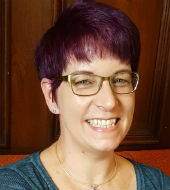
What is it like to hear voices — and are all voices harmful or can they also be helpers? What does voice hearing say about the human mind – and the society we live in? And how can we support people who hear voices? Lisa Forestell has heard voices since she was a child. She is an organizer with the Hearing Voices Movement and with the Western Massachusetts Learning Community, a mutual support initiative run by and for people with lived experience of unusual and extreme states of mind labeled as “mental illness.” http://www.westernmassrlc.org/
Refugees and Trauma | Khatera Aslami-Tamplen | Madness Radio
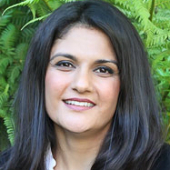
What is it like to flee a war-torn country as a child? What lasting psychological effects do refugees face? Can peer support and trauma informed care lead to lasting recovery? Khatera Aslami Tamplen, an Afghan-American and the Consumer Empowerment Manager for Alameda CountyBehavioral Health Services in California discusses war trauma, the activist struggle to end involuntary commitment, and the value of letting people have a say in their own mental health recovery. pocc.org/ https://copelandcenter.com/facilitators/khatera-aslami
Borderlands Acupuncture | Herman Garcia – Ryan Bemis | Madness Radio
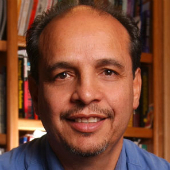
Are psychiatric treatments, experts, and medications the best way for traumatized communities to heal their mental health problems? Could indigenous practices, including traditional Chinese medicine and acupuncture, offer a different way forward — through grassroots community development?
Herman Garcia is the Vice President and Ryan Bemis Founder of Crossroads Community Supported Healthcare, which offers practical skills training to local healers in the violence-stricken communities of Ciudad Juarez and Sierra Tarahumara, Mexico. Joined by health promotors Maria de Jesus, Sister Maria de Rosario Cordova, and Gloria of the Rahrami indigenous group, they discuss supporting communities harmed by the War on Drugs, severe poverty, and inequality. Thanks to Cynthia Pompa for translation.
www.freedom-center.org/files/FreedomCenteracupuncture_brochure.pdf
www.freedom-center.org/files/TrainingGazetteAcupuncture3-06Newspaper.pdf
http://bit.ly/2d4UmfF http://www.americamagazine.org/issue/valley-sorrows
Thinking Upstream: Winning Real Mental Health Reform By Joining the Anti-Corruption Movement
At the end of my talk at the American Psychiatric Association Institute on Psychiatric Services, a psychiatrist in the crowded lecture room put his hand up and posed a surprising challenge: Why was I so concerned about reforming psychiatry and ending iatrogenic harm from medications, diagnosis, and forced treatment when there are so many other issues in society to worry about?
Looking back, the answer was obvious: because psychiatry harmed me personally, and because I saw so many others harmed (including both of my parents), I was inspired to make a difference. I wanted to share what I learned so other people wouldn’t go through what I went through. Like many people who endured injustice personally, I was motivated to do something about it.
An obvious reply now, but not the reply I gave at the time.
Human Rights in India | Bhargavi Davar | Madness Radio
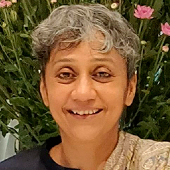
How does the legacy of colonialism affect mental health in India? Are women’s rights, spiritual freedom, and ant-colonialism intertwined? Do women who choose a path of spiritual renunciation have the same freedom as men? Where are human rights more respected: in traditional temples, or in hospital locked wards?
Bhargavi Davar’s mother Bapu was a psychiatric abuse survivor persecuted for her religious devotion. Bapu’s struggle inspired Bhargavi to found the Bapu Trust, where she leads advocacy for mental health reform and community development throughout Asia. Bhargavi is also a lead organizer with INTAR, the International Network Towards Alternatives for Recovery.
www.baputrust.com http://bit.ly/1Mkn3u9 http://bit.ly/1TY2Ap0
www.intar.org
https://www.hrw.org/news/2014/12/03/india-women-disabilities-locked-away-and-abused
Intergenerational Trauma | Naas Siddiqui | Madness Radio
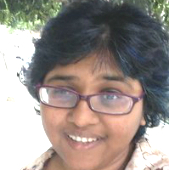
What if psychotic experiences express historical and intergenerational trauma? Does one person’s emotional crisis reach beyond their own individual mind? Could synchronicities and meaningful coincidences guide recovery instead of just being “symptoms”?
Naas Siddiqui, a psychiatric survivor and therapist in training who founded the Spiritual Emergence and other Unusual Experiences student group, descended into altered states after withdrawing from psychiatric medications. She discovered how her Bangladeshi heritage shaped her madness, and found a unique pathway to use her visionary states to heal personal and family trauma.
http://www.madinamerica.com/2015/10/transmuting-historical-trauma/
Stop The Murphy Bill | Leah Harris | Madness Radio
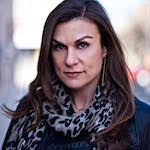
The Families in Mental Health Crisis Act HR 2646 — The Murphy Bill — proposes drastic changes to US mental health policies. Will the Murphy Bill curb violence and improve care? Or will more forced treatment, medication, and hospitalization only enrich pharmaceutical and medical industry power and reinforce stereotypes at the expense of real human needs?
Leah Harris, psychiatric abuse survivor and organizer for the Campaign for Real Change in Mental Health Policy, completed an investigative report on the Murphy Bill’s potential impact on people in crisis, how the gun manufacturer lobby is involved, and the role of Otsuka Pharmaceuticals.
www.realmhchange.org http://www.ndrn.org/en/issues/mental-health/protect-paimi.html www.proteus.com/press-releases/u-s-fda-accepts-first-digital-medicine-new-drug-application-for-otsuka-and-proteus-digital-health/
- Show topics:
- Activism
- Big Pharma
- Human Rights
- System Abolition
Letter to the Mother of a “Schizophrenic:” We Must Do Better Than Forced Treatment and Laura’s Law
 A few months ago I met your son. He said he would be waiting for us in the Berkeley park near where he sleeps outside at night, but at the last minute he called and was in San Francisco. He said he was at “the Mrs. Doubtfire house” with a photograph of his best friend, and that the photo showed numbers and codes predicting Robin Williams’ suicide. He found the house where Williams made one of his films, and was trying to talk to the owner. It was all part of a complex plan, marked mathematically in signs and omens he was collecting.
Communicating With Psychosis | Dina Tyler
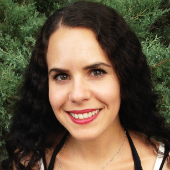
Are there ways to reach people in states of madness? How do talking with ghosts, hearing voices, and seeing visions — as well as enduring family turmoil — relate to psychotic crisis?
When Dina Tyler discovered the meaning of life in an altered state, the treatment she received only inflicted further trauma. Dina instead embraced her madness as a guiding force for recovery, and found a way to leave labels and medications behind. Today she works as a counselor to youth experiencing psychosis, communicating across different realities with people driven away from traditional care.
Dina is the co-director of the Bay Area Mandala Project, co-founder of Bay Area Hearing Voices, and works with an early psychosis intervention program in Alameda County, California. She was awarded Peer Specialist of the Year by the National Council for Behavioral Health in 2015!
Redefining Research: Nev Jones
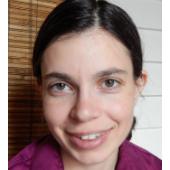
What if researchers collaborated with patients rather than treating them as “informants” and objects of study? Nev Jones survived her mother’s frightening extreme states — and then her own mind unravelled into different realities. She was herself diagnosed with schizophrenia, and began a lifelong exploration of the uniqueness of madness.
Today Nev is a post-doctorate fellow at Stanford University, founder of Chicago Hearing Voices and the Lived Experience Research Network, and part of the the movement to create alternatives to professional control of research on psychosis.
http://depaul.academia.edu/NevJones
http://www.chicagohearingvoices.org
Unmaking Diagnosis: Gary Greenberg
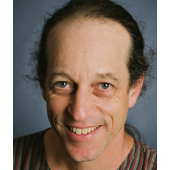
Why did the fifth edition of the Diagnostic and Statistic Manual become so controversial? Is it possible to alleviate human suffering without classifying it as a mental disorder?
Gary Greenberg, psychotherapist, author of Manufacturing Depression and The Book of Woe: The DSM and the Unmaking of Psychiatry, and journalist for Harper’s, the New Yorker, and Rolling Stone, discusses the politics behind psychiatry’s new Bible.
Politics of Language: Sera Davidow
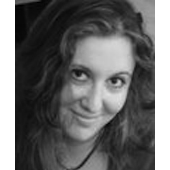
How do psychiatric labels shape our perceptions of others – and ourselves? Are there better ways to understand emotional distress? Does the “peer movement” offer real alternatives — or present new problems? Sera Davidow, psychiatric survivor, director of the peer-run Western Mass Recovery Learning Community (RLC), and co-producer of the new film “Beyond the Medical Model,” discusses the politics of language and innovative programs to truly help people in distress.
http://www.westernmassrlc.org
http://www.madinamerica.com/author/sdavidow/
Queer Poetry Inbetweenland: Jacks McNamara
Is trauma also a source of creative inspiration? Can sexual passion be a force for healing? And do we have to live in either/or boxes — or is there somewhere else?
Artist and activist Jacks McNamara, co-founder of the Icarus Project radical support community, discusses their recently-published anthology Inbetweenland, including poetry about being a genderqueer person, surviving with a broken heart, and how to travel the path from madness to the wounded healer.
http://www.ashley-mcnamara.net
http://www.theicarusproject.net
http://www.crookedbeauty.com
Coming Off Psych Meds: Laura Delano
What do you do when medications for your emotional problems become worse than the problems themselves? Laura Delano went to a psychiatrist at age 18, and for the next decade was prescribed nineteen different psychiatric drugs. After devastating physical and emotional effects, she began a journey to become medication free — and re-discover who she is. What lessons did she learn?
Laura blogs regularly about her experiences at Mad in America, works for a mental health agency in Massachusetts, and is an advocate for drug alternatives and safe withdrawal.
http://www.madinamerica.com/author/ldelano/
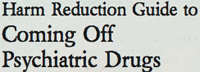
(Link to coming off meds guide: http://willhall.net/comingoffmeds/)

















 Creative Commons 2.5 copyright
Recent Comments