
Families
Understanding Borderline Trauma: Rita Marshall
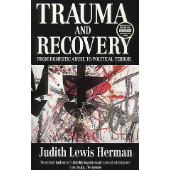
Why are so many trauma survivors, especially women, diagnosed “borderline?” Is the label useful — or sexist and degrading? How can people who live through intergenerational violence be understood and supported — instead of discounted and silenced?
Rita Marshall, human rights activist and former psychiatric inmate from a family of Holocaust survivors, examines the social and political context for the controversial “Borderline Personality Disorder” diagnosis.
Note – this is an interview with a psych survivor activist who asked at the time that her name be disguised. They recently passed away from an illness.
Effective Family Support: Krista MacKinnon
How can family members help a relative in extreme crisis — instead of worsening the situation? Is there a way out of treatment power struggles and arguments about “insight”? And what do families need to change about themselves?
Psychiatric survivor Krista MacKinnon, formerly at Toronto’s Family Outreach and Response program and now Director of Families Healing together, discusses practical methods for turning family relationships into tools for healing.
http://www.familieshealingtogether.com
http://www.practicerecovery.com
http://kristamackinnon.net
http://www.familymentalhealthrecovery.org
Elders and Forgetfulness: Stan Tomandl
Are elders living with forgetfulness, Alzheimer’s, and dementia unreachable? Are there parallels with states called psychotic? Can meaning be found in the confusion of brain injury and coma?
Stan Tomandl, MA, DiplPW and author of Coma Care & Palliative Work, and An Alzheimer’s Surprise Party: Unveiling the Mystery, Inner Experience, and Gifts of Dementia, explores communicating with memory loss and how to make an end of life transition with dignity.
Singing in the Dark | Susan McKeown on Madness Radio
Is poetry the way to truly understand madness? Do rituals and music — such as Ireland’s tradition of keening — have the power to heal emotional suffering?
Susan McKeown, Grammy award-winning singer/songwriter and folklorist, supported her partner through an extreme state. She began a journey to uncover intergenerational trauma in her family and in the history of her native Ireland, and was inspired to take poems about madness — by Anne Sexton, Theodore Roethke, James Clarence Mangan, Gwendolyn Brooks, and others — and set them to music in her album “Singing in the Dark.”
http://www.susanmckeown.com
http://irishphiladelphia.com/singinginthedark
Healing Sex: Staci Haines
Childhood sexual abuse is pervasive in our society, leaving lifelong wounds that affect men as well as women. Is it enough to hold perpetrators accountable, or are there deeper causes of abuse? Do police, courts, and child protection services help heal — or lead to more trauma? And how can body-oriented approaches move beyond the limits of talk therapy?
Child sexual abuse survivor Staci Haines, author of Healing Sex: A Mind-Body Approach to Healing Sexual Trauma and co-founder of Generation Five, discusses transformative justice and liberating society from child abuse.
http://www.generationfive.org
http://www.generativesomatics.org
http://bit.ly/MrJeRp
Meaning From Voices: Eleanor Longden
Hearing voices is strongly connected with traumatic experiences, but are voices a brain malfunction or a creative strategy for protection?
UK psychologist Eleanor Longden survived a diagnosis of paranoid schizophrenia and went on to be a leading researcher around voice hearing, trauma, and dissociation. She is a pioneer in the movement to understand voices as a normal human experience — and truly help people by healing trauma.
http://ind.pn/3ltxoe
http://bit.ly/NjDA77
http://bit.ly/z01Fhn
Bipolar Children: Sharna Olfman
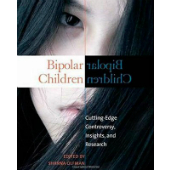
Why are so many children being diagnosed bipolar? Do medications treat disease – or just keep children under control? What else can parents do when faced with difficult behavioral problems?
Sharna Olfman, Psychology Professor at Point Park University and editor of the book Bipolar Children, discusses the growing social and economic pressures to label children bipolar.
Chemical Crucifixion: Grainne Humphrys
Could a young man’s overwhelming visions of Christ and apocalypse be a creative response to life trauma, rather than signs of paranoid schizophrenia? Does madness unfold differently depending on whether it is supported – or feared?
Irish activist and punk musician Grainne Humphrys, herself a survivor of an extreme state, discusses the campaign for the release of former partner John Hunt. John has been incarcerated and drugged against his will since 2005, sparking international outcry.
http://freejohn-loverevolutionary.blogspot.com
http://www.mindfreedomireland.com
Healing Veterans: Paula Caplan
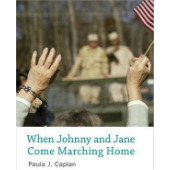
How can we truly help combat veterans facing the aftermath of war? Is veteran trauma a sign of mental illness, or a healthy response to violent situations? Are medications and therapy the answer?
Paula Caplan, author of When Johnny and Jane Come Marching Home: How All of Us Can Help Veterans, discusses healing the wounds of war by listening to the stories of veterans in our communities.
http://whenjohnnyandjanecomemarching.weebly.com
http://www.paulajcaplan.net
Dignity of Elders: Carole Hayes-Collier
Why are nearly a third of all elders in nursing homes given anti-psychotic drugs, despite life threatening side effects? Are medications being used as chemical restraints? Can nursing homes be places of dignity — or should they be abolished?
Carole Hayes-Collier was diagnosed schizophrenic at 19 and left to a lifetime of hospitalization. When she recovered, the abuses she witnessed inspired her to join the Gray Panthers and dedicate her life to elder rights and mental health.
http://graypanthers.org
http://online.wsj.com/article/SB119672919018312521.html
http://www.canhr.org/stop-drugging
Open Dialogue Alternative: Mary Olson
Is a ‘psychotic’ crisis inside one person’s mind — or does it happen between people, in their relationship? Can therapy untangle the web of madness by addressing the family, providers, and entire social network?
Smith College social worker and Fulbright scholar Mary Olson discusses the innovative work of Jaakko Seikkula and colleagues’ Open Dialogue Approach in Finland, which has achieved dramatic success helping people through extreme states labeled ‘psychosis’ and ‘schizophrenia’ — while relying much less on medication and hospitalization.
http://www.dialogicpractice.net
http://beyondmeds.com/2010/01/04/alternative-for-psychosis
http://www.willhall.net/opendialogue
Survivor Spoken Word: Leah Harris
Leah Harris was orphaned after both parents were diagnosed with schizophrenia and died from medication toxicity. Today she is a leading voice in survivor activism, and her powerful spoken word poetry, including “I Was A Teenage Mental Patient,” has been featured in publications including Word Warriors: 35 Women Leaders in the Spoken Word Revolution, and DC Poets against the War: An Anthology. Leah is also the co-coordinator of the US Network of Users and Survivors of Psychiatry.
Buy her new cd “Take Refuge” at the National Empowerment Center: http://bit.ly/7f5kyN
Recovery and Diagnosis: Lisa Darbyshire
How can a chaotic and oppressive family life lead to trauma and extreme states? Do medications and diagnosis provide help, or can they make things worse?
Psychiatric abuse survivor Lisa Darbyshire, Massachusetts organizer with the Freedom Center and the Recovery Learning Community, discusses her personal experiences of hospitalization and recovery, including the struggle with learned helplessness and dependence.
School Bullying: Dawn Menken
What are the lasting impacts of taunting, teasing, and physical harassment between children? Why are kids who are different singled out and picked on? What can parents do if their children are victims of bullies?
Psychotherapist, parent, and process worker Dawn Menken, author of Speak Out! Talking About Love, Sex & Eternity, discusses her work with public schools and families to break the cycle of bullying.
dmenken(at)igc(dot)org
Birth Trauma w/ Annie Robinson
Labor doula and Icarus Project student organizer Annie Robinson talks about her experience in the mental health system as an adolescent, and how it led to her interest in changing medical birthing procedures and becoming a doula.
Annie discusses the trauma caused by doctor interventions in childbirth and its lasting effects on both children and mothers.
Anniewrobinson(at)gmail(dot)com
http://www.dona.org
http://www.motherfriendly.org
















 Creative Commons 2.5 copyright
Recent Comments