
Community
Crazywise Film | Phil Borges | Madness Radio
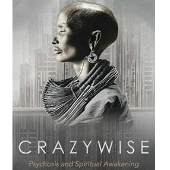
Is madness breakdown or initiation into a spiritual calling? Crazywise is a documentary film that explores the meaning of psychosis from the perspective of traditional cultures and shamanism, following the stories of people struggling with extreme states, spiritual awakening, and the mental health system’s failures. Filmmaker Phil Borges is an award winning photographer and filmmaker whose work has appeared on National Geographic and Discover. www.crazywisefilm.
Traditional South African Healing | Gogo Ekhaya Esima | Madness Radio
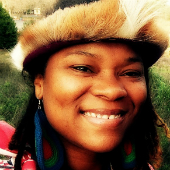
How can seeing visions and hearing voices be transformed into a spiritual gift for healing? What does the initiation ordeal into becoming a shaman involve? Gogo Ekhaya Esima was diagnosed with psychosis and confined in psychiatric hospitals before she became an initiated Sangoma healer in the Zulu tradition of South Africa. Today she is a certified Peer Recovery Specialist in mental health, a trauma survivor, and a spiritual teacher and was recently featured in the film Crazywise.
Borderlands Acupuncture | Herman Garcia – Ryan Bemis | Madness Radio
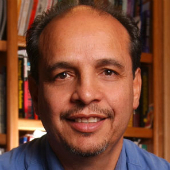
Are psychiatric treatments, experts, and medications the best way for traumatized communities to heal their mental health problems? Could indigenous practices, including traditional Chinese medicine and acupuncture, offer a different way forward — through grassroots community development?
Herman Garcia is the Vice President and Ryan Bemis Founder of Crossroads Community Supported Healthcare, which offers practical skills training to local healers in the violence-stricken communities of Ciudad Juarez and Sierra Tarahumara, Mexico. Joined by health promotors Maria de Jesus, Sister Maria de Rosario Cordova, and Gloria of the Rahrami indigenous group, they discuss supporting communities harmed by the War on Drugs, severe poverty, and inequality. Thanks to Cynthia Pompa for translation.
www.freedom-center.org/files/FreedomCenteracupuncture_brochure.pdf
www.freedom-center.org/files/TrainingGazetteAcupuncture3-06Newspaper.pdf
http://bit.ly/2d4UmfF http://www.americamagazine.org/issue/valley-sorrows
New Vision for Psychiatry | Jim van Os | Madness Radio
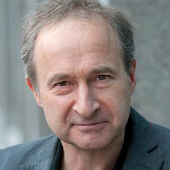
What if psychiatry recognized that schizophrenia does not exist? How might diagnostic categories (left over from the asylum era) be replaced by spectrums of experience that show how psychotic experiences can also be normal? What if services were oriented around individuals, not the statistical groups of “evidence based” research? And could the mental health system as we know it, which defines health as the absence of disease symptoms, be replaced with a new definition of health, health as empowerment in life?
Jim van Os, professor of Psychiatric Epidemiology at Maastricht University and member of the Royal Dutch Academy of Science with more than 700 publications, is one of the top one percent highly cited scientists in the world. His research combines with the experiential knowledge of people with lived experience of psychosis to envision a radically new direction for the mental health system. (Alternate 58 min version here.)
https://www.madnessradio.net/files/SchizophreniaDoesNotExist-vanOs-BMJ.pdf https://www.madnessradio.net/files/HuberHowShouldWeDefineHealthbmjd4163.pdf
http://www.brown.uk.com/schizophrenia/rossler.pdf
http://www.huffingtonpost.com/
http://bit.ly/1IYsEez
Podcast: Play in new window | Download (0.2KB)
Subscribe: RSS
Economic Austerity and Mental Health | Mary O’Hara | Madness Radio

Is mental health about individual diseases, or the health of communities and countries as a whole? How do economic policies after the 2008 crisis impact disability rights, suicide rates, and community wellbeing? Are cuts in social spending really necessary for economic growth, or do they cause more problems in the long run?
Guardian columnist Mary O’Hara, author of Austerity Bites, discusses the devastating impact of austerity economic policies in Europe, the scapegoating mindset behind social spending cuts, and the dangers of pursuing similar policies in the US and globally. http://www.theguardian.com/profile/maryohara www.austeritybitesuk.com
http://m.mh.bmj.com/content/41/1/40.full
http://bit.ly/Ot9hzg
Healing Connection | Lauren Spiro
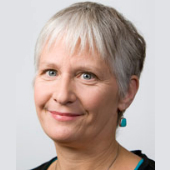
How do we recover from childhood violence? When Lauren Spiro was 14, her father was murdered. Eighteen months later, she began to have unusual spiritual experiences and was diagnosed with schizophrenia. Today she works to promote peace and healing in communities, fulfilling the vision she had in her extreme state.
Lauren is co-director of Emotional CPR, associate director of the National Coalition for Mental Health Recovery, and her new memoir is Living For Two: A Daughter’s Journey from Grief and Madness to Forgiveness and Peace.
http://laurenspiro.wordpress.com
www.ncmhr.org
www.emotional-cpr.org
Indian Country Psychology: David Walker
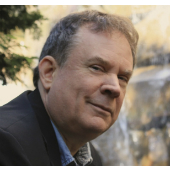
How is the legacy of colonialism impacting American Indian mental health today? Does the Indian Health Service meet the needs of the people on tribal land? Can Native peoples revitalize cultural traditions and reverse centuries of racism?
David Walker, mixed-heritage Cherokee, psychologist working at the Yakama Nation, and author of the award-winning novel Tessa’s Dance, discusses healing the deep wounds of intergenerational trauma in Indian Country.
Effective Family Support: Krista MacKinnon
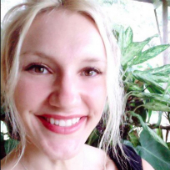
How can family members help a relative in extreme crisis — instead of worsening the situation? Is there a way out of treatment power struggles and arguments about “insight”? And what do families need to change about themselves?
Psychiatric survivor Krista MacKinnon, formerly at Toronto’s Family Outreach and Response program and now Director of Families Healing together, discusses practical methods for turning family relationships into tools for healing.
http://www.familieshealingtogether.com
http://www.practicerecovery.com
http://kristamackinnon.net
http://www.familymentalhealthrecovery.org
Politics of Language: Sera Davidow

How do psychiatric labels shape our perceptions of others – and ourselves? Are there better ways to understand emotional distress? Does the “peer movement” offer real alternatives — or present new problems? Sera Davidow, psychiatric survivor, director of the peer-run Western Mass Recovery Learning Community (RLC), and co-producer of the new film “Beyond the Medical Model,” discusses the politics of language and innovative programs to truly help people in distress.
http://www.westernmassrlc.org
http://www.madinamerica.com/author/sdavidow/
Queer Poetry Inbetweenland: Jacks McNamara
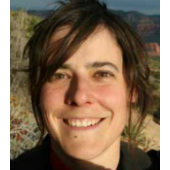
Is trauma also a source of creative inspiration? Can sexual passion be a force for healing? And do we have to live in either/or boxes — or is there somewhere else?
Artist and activist Jacks McNamara, co-founder of the Icarus Project radical support community, discusses their recently-published anthology Inbetweenland, including poetry about being a genderqueer person, surviving with a broken heart, and how to travel the path from madness to the wounded healer.
http://www.ashley-mcnamara.net
http://www.theicarusproject.net
http://www.crookedbeauty.com
Bipolar Children: Sharna Olfman
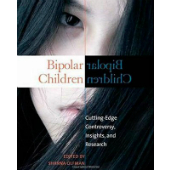
Why are so many children being diagnosed bipolar? Do medications treat disease – or just keep children under control? What else can parents do when faced with difficult behavioral problems?
Sharna Olfman, Psychology Professor at Point Park University and editor of the book Bipolar Children, discusses the growing social and economic pressures to label children bipolar.
Healing Veterans: Paula Caplan
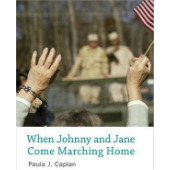
How can we truly help combat veterans facing the aftermath of war? Is veteran trauma a sign of mental illness, or a healthy response to violent situations? Are medications and therapy the answer?
Paula Caplan, author of When Johnny and Jane Come Marching Home: How All of Us Can Help Veterans, discusses healing the wounds of war by listening to the stories of veterans in our communities.
http://whenjohnnyandjanecomemarching.weebly.com
http://www.paulajcaplan.net
Exporting Mental Disorders: Ethan Watters
How did pharmaceutical giant Glaxo Smith Kline create “depression” in Japan — and a billion dollar market for its anti-depressant drug Paxil? Why do people diagnosed with schizophrenia recover more in Tanzania than they do in the US? Can western-style psychotherapy help tsunami survivors in Sri Lanka?
Ethan Watters, author of Crazy Like Us: The Globalization of the American Psyche, discusses how mental disorders are cultural products, defined in the US and then exported around the world.
Meanings of Madness: Gail Hornstein
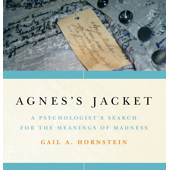
Seamstress Agnes Richter was locked away in a mental asylum in the 1890s, and was so determined to have a voice that she embroidered her personal story onto the jacket she wore on the ward. What is the hidden history of people writing their own narratives of going insane? How important is it to listen to the experiences of “mentally ill” people? Is there meaning in madness?
Gail Hornstein, Mt. Holyoke College professor and author of Agnes’s Jacket: A Psychologist’s Search for the Meanings of Madness, discusses the work of the Hearing Voices Movement in the UK, peer run support communities including Freedom Center in the US, and why professionals should let patients speak for themselves.
Icarus Project: Sascha DuBrul
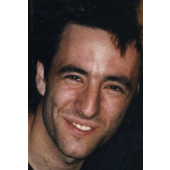
How did the New York underground of punk rock music, squatting, and homeless protest give rise to a thriving and innovative peer-run mental health community? Are there creative gifts to be found in the depths of madness? Does the future of Mad Pride lie in the joining of activism with spirituality?
Icarus Project co-founder Sascha Altman DuBrul discusses his escape into apocalyptic visions and psychiatric hospitals, and how he was inspired to challenge the identity of bipolar disorder.
scatter(at)theicarusproject(dot)net
http://www.theicarusproject.net

















 Creative Commons 2.5 copyright
Recent Comments